Pennsylvania Senate Primaries Become Multi-Million-Dollar Battle Between Gambling Interests

Pennsylvania’s Republican Senate primaries have evolved into a high-stakes political fight fueled by competing gambling interests, with millions of dollars flowing into key races ahead of critical legislative and regulatory decisions later this year.
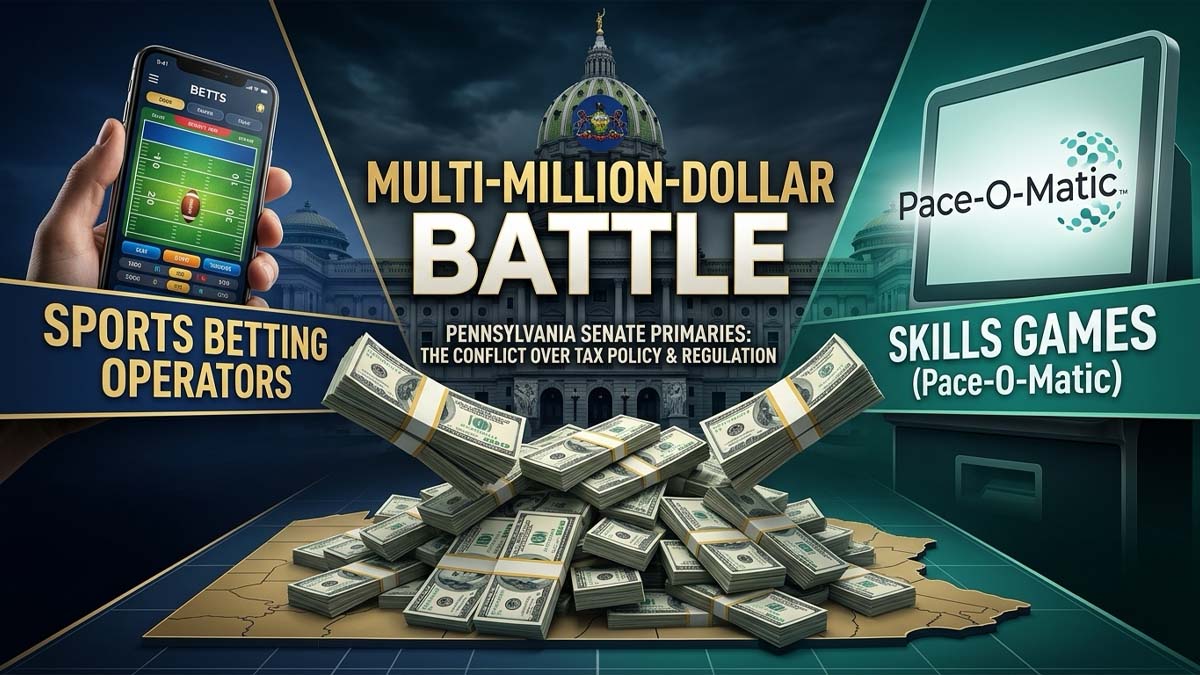
According to recent reporting, more than $8 million has already been spent targeting three Republican incumbents in contests that have effectively become proxy battles between the state’s sports betting industry and the controversial skill games sector led by Pace-O-Matic.
At the center of the conflict are two very different goals. Sports betting operators are working to protect lawmakers who helped preserve Pennsylvania’s 36% sports betting tax rate during last year’s budget negotiations, while Pace-O-Matic and its allies are backing challengers against senators who resisted favorable legislation for skill games.
The spending war reflects the growing political influence of gambling companies across the United States as states increasingly rely on gaming revenue while simultaneously debating regulation, taxation, and market expansion.
Sports Betting Operators Rally Behind Key Incumbents
A super PAC aligned with the sports betting industry has directed significant resources toward supporting Republican senators Lisa Baker, Camera Bartolotta, and Dan Gebhard.
The funding structure reportedly involved contributions from FanDuel, DraftKings, and Fanatics Sportsbook flowing through several political organizations before reaching Pennsylvania-focused campaign groups. The effort comes after lawmakers considered increasing Pennsylvania’s already high 36% sports betting tax rate during the 2025 budget impasse.
Industry lobbying efforts ultimately helped block the proposed increase, and a final budget agreement passed without changes to the tax structure. Sports betting groups later ran advertising campaigns thanking supportive lawmakers for opposing higher taxes on sportsbooks. With another budget deadline approaching on June 30, operators appear eager to maintain allies in Harrisburg ahead of renewed tax discussions.
The aggressive political involvement highlights how valuable Pennsylvania has become to major sportsbook operators. The state remains one of the country’s largest regulated gambling markets, with online casino gaming, sports betting, and retail gaming all generating substantial revenue growth in recent years.
The broader U.S. sports betting and iGaming industry has continued to expand rapidly, as seen in Q1 2026 earnings revealing iGaming boom as prediction markets reshape gambling industry.
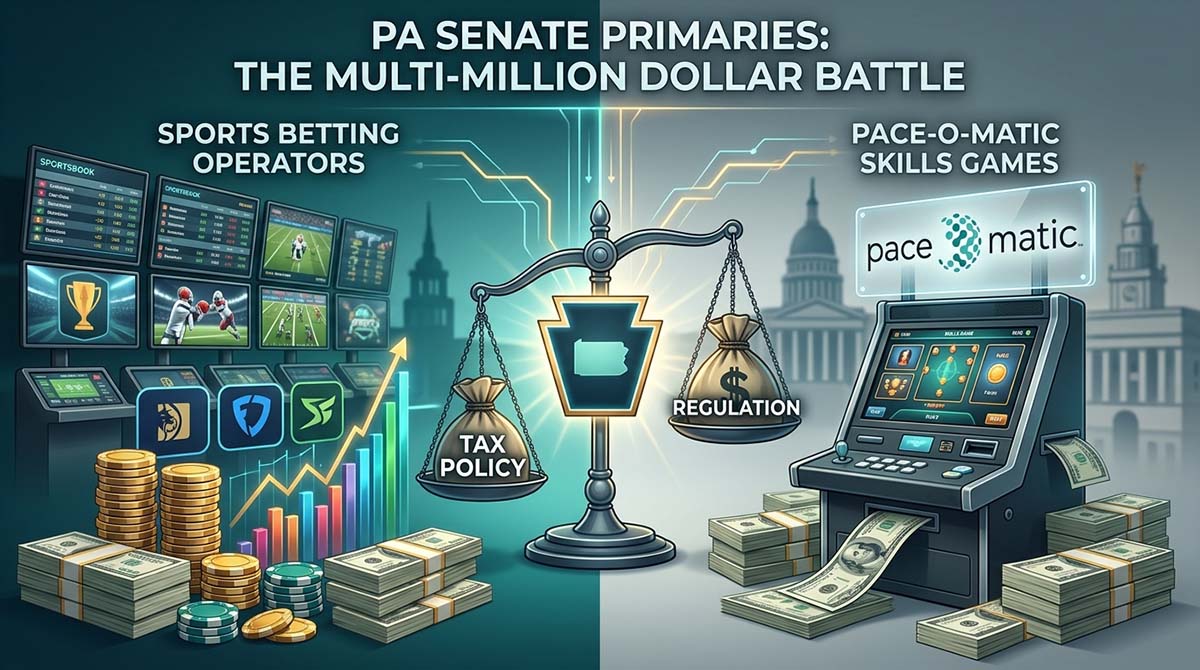
Sports betting operators and skill games company Pace-O-Matic are fighting over tax and regulation.
Pace-O-Matic Intensifies Fight Over Skill Games
While sportsbooks are attempting to defend incumbents, Pace-O-Matic-backed groups are spending heavily to defeat them.
Citizens Alliance, a conservative political organization funded largely by Pace-O-Matic executives and affiliated PACs, has supported challengers against the same Republican senators backed by sportsbook interests. The challengers include candidates from outside traditional political circles, including a behavioral health specialist, a masonry business owner, and a professional cowboy.
The conflict stems from ongoing disputes over the legal status and regulation of skill games in Pennsylvania. Pace-O-Matic has pushed for legislation that would formalize and regulate its machines, while many lawmakers and casino-backed groups argue the devices operate too similarly to slot machines without being subject to equivalent taxes and oversight.
The political battle mirrors similar efforts previously seen in Virginia, where Pace-O-Matic successfully supported lawmakers who later advanced legislation favorable to the skill games industry.
However, Pennsylvania’s situation remains more complicated. The Pennsylvania Supreme Court is still expected to rule on the legality of the machines themselves, a decision that could dramatically reshape or potentially invalidate the broader legislative debate.
The dispute also reflects wider tensions across the gambling industry as newer gaming products continue to challenge existing regulatory frameworks. Similar policy debates have emerged in stories like New Jersey lawmakers push to ban micro-betting as revenue hits record highs.
Questions Grow Over Campaign Transparency and Political Influence
Beyond the spending totals, critics have raised concerns over the increasingly complex flow of gambling-related political donations.
Campaign finance observers noted that contributions often move through multiple PACs and intermediary organizations before reaching state-level races, making it difficult for voters to identify the original funding sources behind advertisements and political campaigns.
The issue has drawn additional scrutiny following reports involving controversial campaign mailers linked to gambling-connected PAC activity in Pennsylvania legislative races.
Transparency advocates argue the layered funding structures resemble broader national lobbying strategies increasingly used by gambling companies and related industries.
At the same time, both sides appear prepared for a prolonged political fight extending beyond the current primaries. Pennsylvania lawmakers are expected to revisit gambling taxation and skill games regulation during upcoming budget negotiations, while the pending Supreme Court ruling continues to loom over the entire debate.
The outcome could significantly affect one of the nation’s largest gambling markets. Pennsylvania already ranks among the leading U.S. jurisdictions for online gaming revenue, as highlighted in Pennsylvania’s all-time gambling revenue record with $623.1M.
Regardless of the primary results, the latest spending surge demonstrates how gambling companies are increasingly shaping state politics through targeted campaign financing, lobbying efforts, and regulatory influence battles.
With millions already committed and major legislative decisions still ahead, Pennsylvania’s gambling industry appears set to remain one of the state’s most powerful political forces throughout 2026.