Q1 2026 Earnings Reveal iGaming Boom as Prediction Markets Reshape Gambling Industry

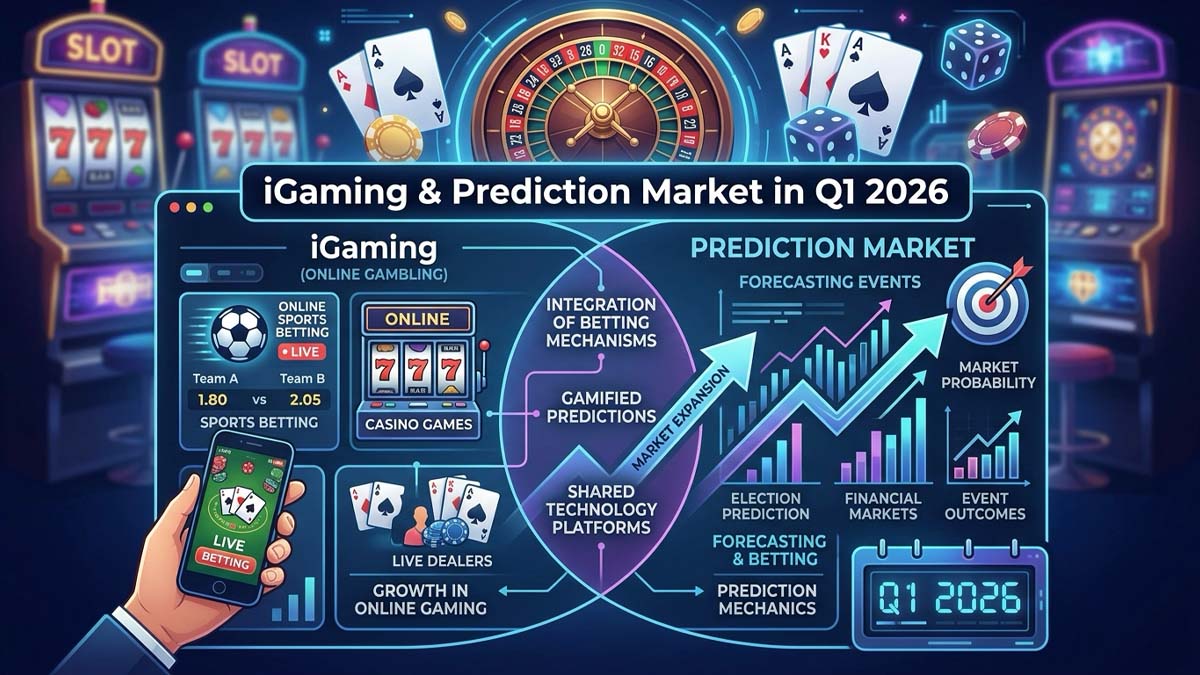
The latest wave of Q1 2026 earnings reports from major gambling and fintech companies has revealed a consistent industry trend: iGaming is significantly outperforming traditional sports betting, while prediction markets are rapidly becoming a meaningful source of revenue.
Results from Caesars Entertainment, Rush Street Interactive (RSI), Sportradar, and Robinhood all pointed in the same direction. Sports betting remains a necessary part of the modern gambling ecosystem, but online casino products are generating stronger growth, higher margins, and deeper customer engagement.
Caesars Entertainment reported consolidated Q1 revenue of $2.9 billion, up 3% year over year, with most of that growth coming from its digital division. The company’s digital revenue climbed 11.6% to $374 million, while digital EBITDA surged 60.5% to $69 million.
The strongest performance came from iCasino products, where revenue increased 18% thanks to higher monthly activity and spending. Sports betting, meanwhile, saw overall wagering volume decline by 1%, despite improved hold rates.
CEO Tom Reeg highlighted the company’s long-term digital opportunity during the earnings call, stating there is “a gigantic opportunity in converting customers in our database that play digitally elsewhere.”
The numbers underline a broader industry reality: operators are increasingly generating more revenue from existing casino-focused players rather than aggressively expanding sports betting audiences.
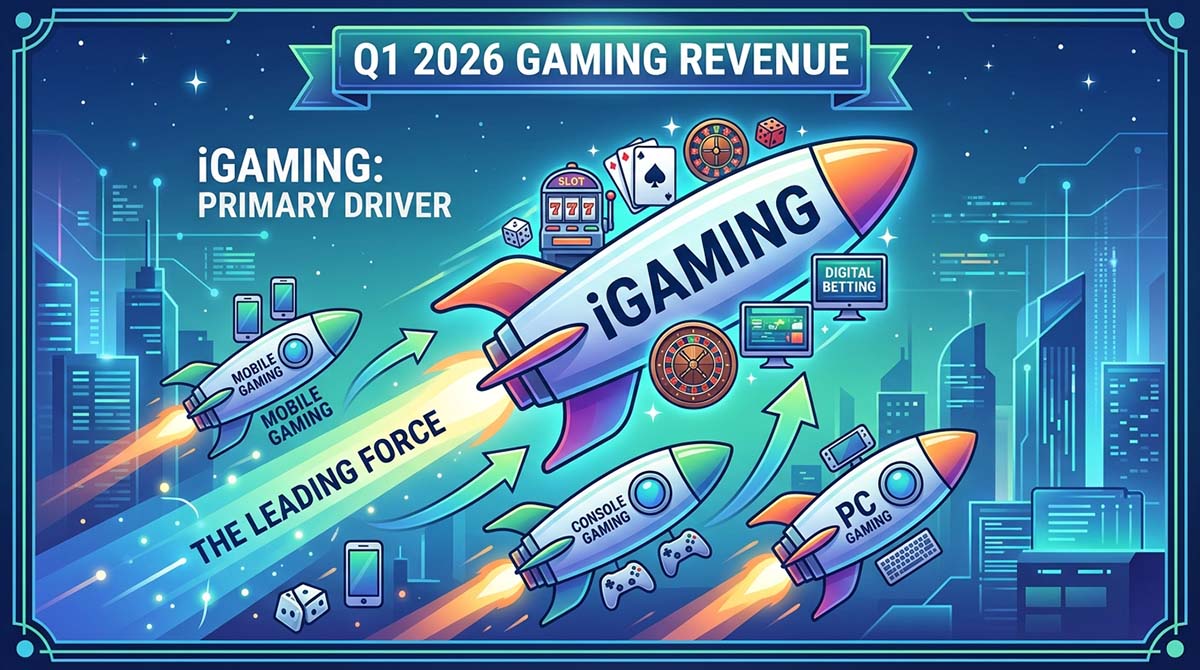
iGaming is the main driver in gaming revenue in Q1 2026
Rush Street Interactive Delivers Standout Quarter
Rush Street Interactive posted one of the strongest quarters among major online gambling operators, with revenue jumping 41% year over year to a record $370.4 million.
Net income climbed 134% to $26.2 million, while adjusted EBITDA rose 81% to $60.2 million. The company also raised its full-year revenue guidance, reflecting confidence in continued momentum throughout 2026.
Crucially, RSI’s growth was fueled primarily by online casino products rather than sports betting. Monthly active users in North American iGaming markets increased 62%, continuing a trend that has accelerated in recent quarters.
During the earnings call, JPMorgan analyst Daniel Politzer asked about the growing influence of prediction markets on customer acquisition and competition across the sector.
CEO Richard Schwartz responded that prediction markets are “not an area of high priority for us,” adding that RSI’s growth is being driven by its “casino-first strategy, which caters to a different player profile.”
That distinction may prove increasingly important as prediction markets begin competing more directly with sportsbooks for customer attention and wagering activity.
The performance also aligns with broader industry trends seen in stories like Michigan crossing $3 billion in annual iGaming revenue, which highlighted accelerating online casino growth in regulated US markets.
Prediction Markets Become a Serious Revenue Category
While iGaming dominated operator earnings, prediction markets emerged as the most discussed topic among analysts and executives.
Robinhood delivered perhaps the clearest sign of how quickly the category is evolving. The company reported that event-contract trading volume reached 8.8 billion contracts during the quarter, helping drive a 320% increase in “other transaction revenue” to $147 million.
CEO Vladimir Tenev stated during the earnings call:
Robinhood is the largest retail brokerage firm in prediction markets, and we’ve been one of the first to adopt a new asset class.
Robinhood also announced the creation of Rothera, a joint venture with Susquehanna International Group focused on building a CFTC-licensed prediction market exchange.
Sportradar similarly acknowledged prediction markets as a key future growth area. The company launched Playradar, a dedicated iGaming-focused brand, while CEO Carsten Koerl said the business intends to capitalize on “new avenues of growth, including prediction markets and iGaming.”
For companies built around sports betting infrastructure, the shift is strategically significant. Prediction markets appear to be pulling more engagement away from traditional sportsbooks than from online casinos, creating additional pressure on sports-centric operators.
Taken together, the Q1 reports suggest the gambling industry is entering a new phase. iGaming continues to deliver the strongest operational results, while prediction markets are quickly evolving from a niche experiment into a mainstream revenue driver.