New Jersey Lawmakers Push to Ban Micro-Betting as Revenue Hits Record Highs

New Jersey lawmakers are advancing efforts to ban micro-betting, a fast-paced form of in-game wagering, even as the state continues to report record-breaking gambling revenues. The proposed legislation highlights a growing tension between economic gains and public health concerns tied to gambling behavior.
Assembly Bill A3258 and Senate Bill S-2160 both target micro-betting markets, which allow bettors to place wagers on highly specific, real-time events within a game—such as a single pitch in baseball or a possession in basketball. These bets can be placed and settled within seconds, creating a rapid cycle of continuous wagering.
Lawmakers Cite Addiction Risks and Integrity Concerns
Supporters of the proposed ban argue that the speed and frequency of micro-betting significantly increase the risk of problem gambling. The legislation points to a 277% rise in calls to the Council on Compulsive Gambling of New Jersey’s helpline since 2018 as evidence of a growing issue.
Assemblyman Dan Hutchison, who introduced A3258, emphasized the human impact behind the statistics, Hutchison said:
I have seen the horrors of gambling,
Critics of micro-betting also highlight concerns around sports integrity. Because wagers are tied to minor, highly specific moments in a game, they may be more vulnerable to manipulation or suspicious activity. Lawmakers view this as an additional risk factor that strengthens the case for regulatory intervention.
In addition to addiction concerns, lawmakers have raised questions about sports integrity. Micro-bets often focus on highly specific, isolated moments within a game, which some believe may be more vulnerable to manipulation or suspicious activity.
The proposed measures align with broader efforts across the U.S. to tighten oversight of sports betting and enhance consumer protections, particularly as mobile wagering expands access to younger and more frequent users.
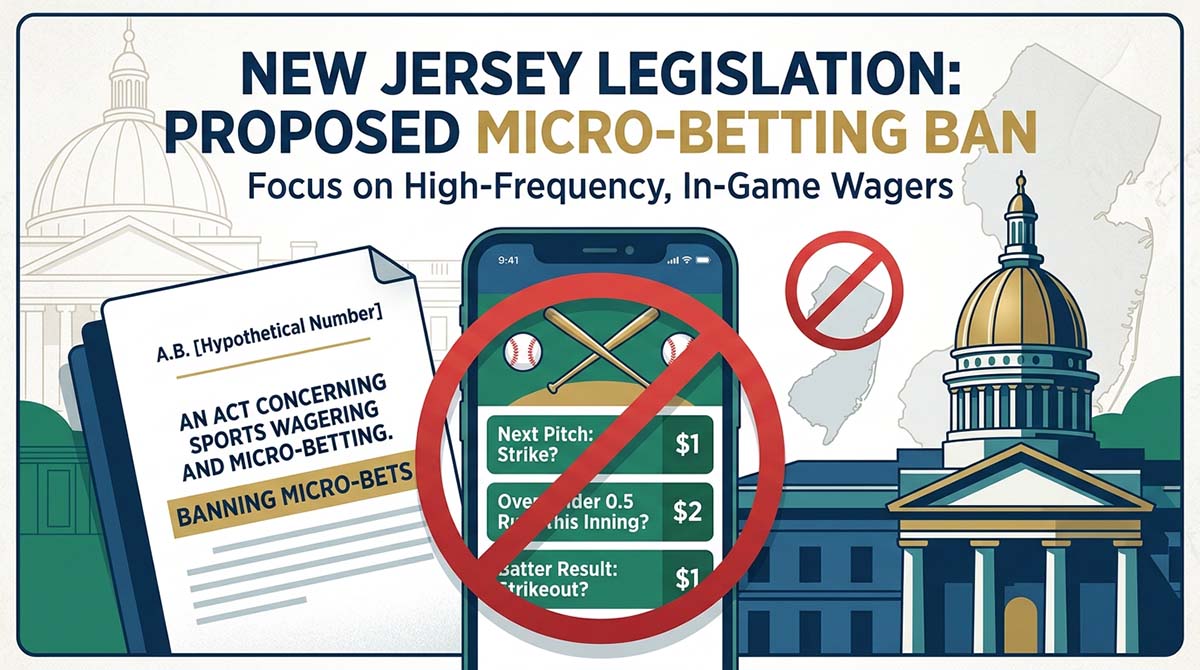
New Jersey proposed micro-betting ban with bills A3258 and S2160
Industry Faces Revenue Trade-Offs and Market Shifts
The push to ban micro-betting comes at a time when New Jersey’s gambling industry is performing at record levels. The state reported $6.98 billion in gross gambling revenue for 2025, with significant contributions from sports betting.
Events such as the Super Bowl alone generated $126 million in wagers, underlining the scale of market activity, reinforcing trends highlighted in New Jersey’s gaming revenue reaching $520M in February 2026.
This creates a complex trade-off for policymakers, who must weigh the financial benefits of a thriving industry against the potential social costs.
If the legislation passes, licensed operators would be required to remove micro-betting markets from their platforms. This could lead to immediate changes in product offerings, user experience, and marketing strategies, along with potential revenue losses in one of the most engaging betting segments.
Industry stakeholders argue that operators already invest heavily in responsible gambling initiatives and tools designed to mitigate harm. However, opponents counter that the accessibility and speed of modern betting products may be outpacing existing safeguards.
Operators may need to reallocate resources toward more traditional betting formats or develop alternative products that align with evolving regulatory expectations. The shift could also introduce compliance costs as companies adjust their platforms and marketing strategies.
Concerns Grow Over Offshore Betting Alternatives
One of the key concerns surrounding a potential ban is the possibility that bettors could turn to offshore, unregulated platforms to continue accessing micro-betting markets. Unlike licensed operators in New Jersey, these sites are not subject to the same consumer protection standards, including self-exclusion programs and regulatory oversight.
This raises questions about whether restricting micro-betting within regulated channels could unintentionally expose users to greater risks elsewhere.
Senate Bill S-2160 continues to move through the legislative process, with further debate and approvals required before a final decision is reached. Lawmakers are expected to continue weighing the trade-offs between safeguarding consumers and maintaining a competitive, regulated betting market.
As discussions progress, New Jersey’s approach to micro-betting could influence regulatory trends in other states, particularly as jurisdictions across the U.S. place increasing emphasis on responsible gambling and player protection.