How to Win Scratch Offs Every Time: Proven Strategies and Expert Tips

Introduction
No method guarantees you’ll win scratch offs every time—these are games of chance with fixed odds and negative expected value. However, specific strategies can dramatically improve your odds, help you avoid wasted money on depleted games, and maximize your chances of walking away with a winning ticket.
This guide covers ticket selection methods, odds analysis, budgeting strategies, and advanced techniques for scratch off games. It doesn’t cover illegal methods, insider schemes, or “guaranteed systems” that promise impossible results. The focus is entirely on perfectly legal approaches that serious players use to gain an edge.
The target audience includes two groups: casual players who want to stop buying scratch off tickets blindly and improve their winning percentage, and serious scratch off enthusiasts who treat this as quantitative decision-making rather than pure random chance.
Direct answer: The most effective approach to win scratch off tickets combines selecting high-value games with remaining top prizes, calculating actual expected value from state lottery website data, buying in strategic quantities from the same roll, and maintaining strict budget discipline.
After reading this guide, you’ll gain:
- Improved ticket selection skills based on remaining prizes and odds of winning
- Budget management techniques that prevent loss chasing
- Methods for calculating expected value and identifying the right scratch off cards
- Advanced pattern recognition for bulk purchasing strategies
- Responsible playing approaches that keep scratch off games fun
Understanding Scratch Off Fundamentals
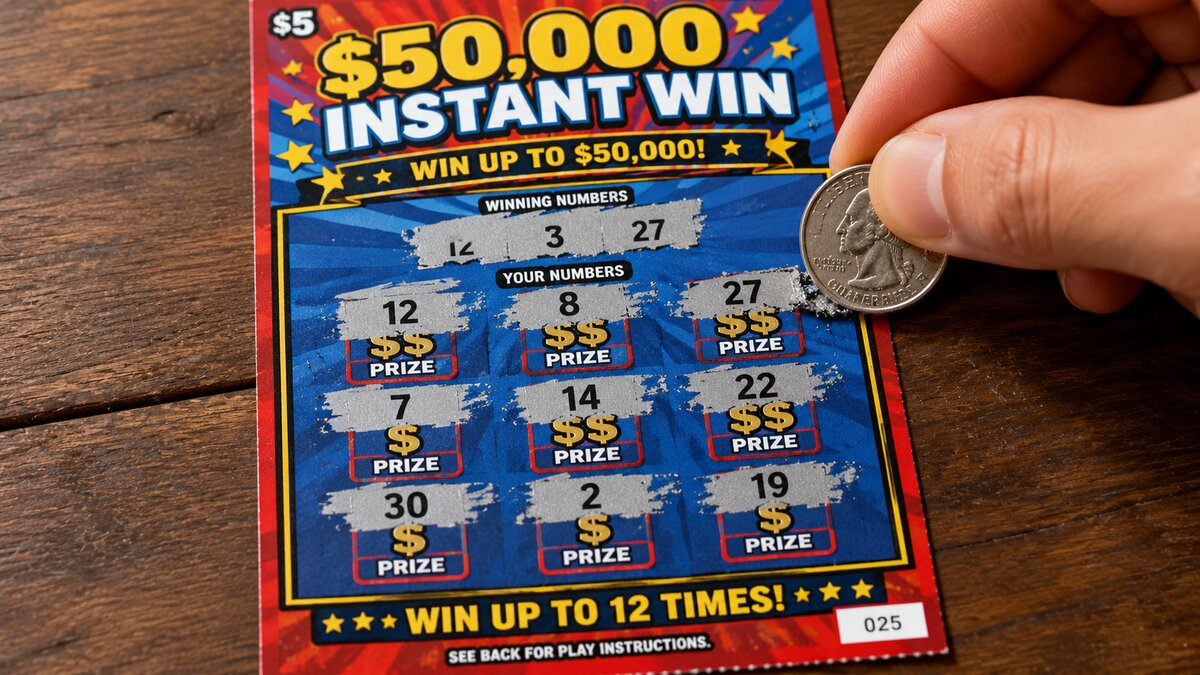
Understanding scratch off cards requires knowing how these games actually work beneath the surface. Every scratch ticket game divided into production runs contains a fixed number of prizes at each tier, with specific odds printed in the fine print. Without this foundation, players fall into common mistakes—buying games whose top prizes are gone or ignoring mathematical realities that determine long-term outcomes.
Prize Distribution and Ticket Rolls
Winners are scattered randomly throughout ticket rolls, but with constraints. When lotteries print scratch off games, they distribute prizes across batches according to predetermined algorithms. Top prizes may appear in any roll, sometimes two in the same batch, sometimes spread across an entire run of thousands of tickets.
Retailers typically receive whole rolls, meaning tickets sold from the same roll share the same prize pool characteristics. This creates strategic buying opportunities—purchasing consecutive tickets from the same roll slightly increases your chance of capturing prizes from that specific segment of the prize structure. Some big winners report success buying multiple tickets from a single batch rather than spreading purchases across different games.
Odds Calculation and Expected Value
Every scratch ticket displays overall odds on the back—something like “1 in 4.5 odds of winning.” This figure includes all prize levels, from break-even amounts to the jackpot. What most players miss: these odds reflect initial conditions when all tickets sold started their journey, not current reality after prizes have been claimed.
Expected value (EV) represents the mathematical average return minus ticket cost. Most scratch off games return 60-80% to players, meaning you lose 20-40% over the long run. Analysis of Pennsylvania lottery games showed a $30 ticket with EV around $23.10 (loss of approximately 23%), while cheaper tickets at lower price point showed proportionally worse returns—$1 games averaged around 29% loss. Understanding this helps you identify which price points offer better odds relative to cost.
State Lottery Systems and Prize Tracking
State lotteries publish “prizes remaining” reports showing how many tickets at each prize level remain unclaimed. This data—available on your local state lottery page—transforms random buying into informed decision-making. You can verify whether top prizes still exist before spending money on any given ticket.
Recent analysis across 41 states revealed approximately 17% of active scratch games are “dead zone” games—zero top prizes remain, yet tickets are still sold at full price. In states like Wisconsin and Oregon, over 50% of games on shelves fall into this category. Accessing this information through your state lottery website or tools like SavvyScratch and LotteryCalc puts you ahead of players who buy blindly.
Strategic Ticket Selection Methods
Building on these fundamentals, strategic selection separates informed players from those relying purely on luck. The goal isn’t finding a magic formula but consistently making better decisions about which scratch off cards deserve your money.
Price Point Analysis and Game Selection
Scratch off tickets typically range from $1 to $30 or higher, each with distinct risk-reward profiles:
| Price Point | Typical Odds | Average Loss % | Top Prize Range |
|---|---|---|---|
| $1 | 1 in 5-6 | ~29-30% | $500-$5,000 |
| $5 | 1 in 4-5 | ~28-30% | $50,000-$100,000 |
| $10 | 1 in 3.5-4.5 | ~27% | $100,000-$500,000 |
| $20 | 1 in 3-4 | ~25% | $500,000-$1,000,000 |
| $30 | 1 in 2.5-3.5 | ~23% | $1,000,000+ |
Expensive tickets offer better odds of winning any prize and lower percentage losses, but require more money upfront. Cheaper tickets reduce downside risk per play but yield smaller potential payouts and proportionally worse returns. Your specific lottery budget and risk tolerance determine the optimal price point.
New scratch games launch with full prize pools, making them attractive options. However, waiting a few weeks allows data to emerge—you can then verify whether top prizes have been claimed while still accessing most of the original prize distribution.
Remaining Prize Verification
Before buying tickets, follow this verification process:
- Visit your state lottery website’s “prizes remaining” or “scratchers” section
- Locate your target game and check remaining top prizes—avoid tickets from games showing zero jackpots
- Compare total tickets remaining versus total printed to estimate what fraction of the prize structure remains
- Calculate current expected value: (remaining prize pool ÷ remaining tickets × cost) tells you actual return percentage
Games where unclaimed prizes remain abundant relative to tickets sold offer better value than depleted games selling at the same price. This simple research step—taking under five minutes—can prevent you from buying scratch off tickets in dead zone games where you’ve already lost your chance at the biggest payouts.
Timing and Retailer Strategy
High-turnover locations—busy gas stations, major supermarkets, high-traffic convenience stores—cycle through more tickets daily. This matters because faster turnover means winning scratch off games are being discovered and claimed regularly, and fresh inventory arrives more frequently.
Best times to buy include shortly after new game releases (full prize availability), after retailer restocking (fresh rolls), and early in the week when weekend buyers have cleared older inventory. Building relationships with retailers occasionally holds value—clerks may share when new scratch games arrive or when packs are being rotated out.
Watch for lottery commission announcements about big winners at specific stores. Some players interpret this as a sign those locations “pay out” more, though statistically it simply reflects higher volume. Either way, high-volume locations ensure you’re buying from active, rotating inventory rather than dusty tickets sitting for months.
Advanced Winning Techniques and Mathematical Analysis
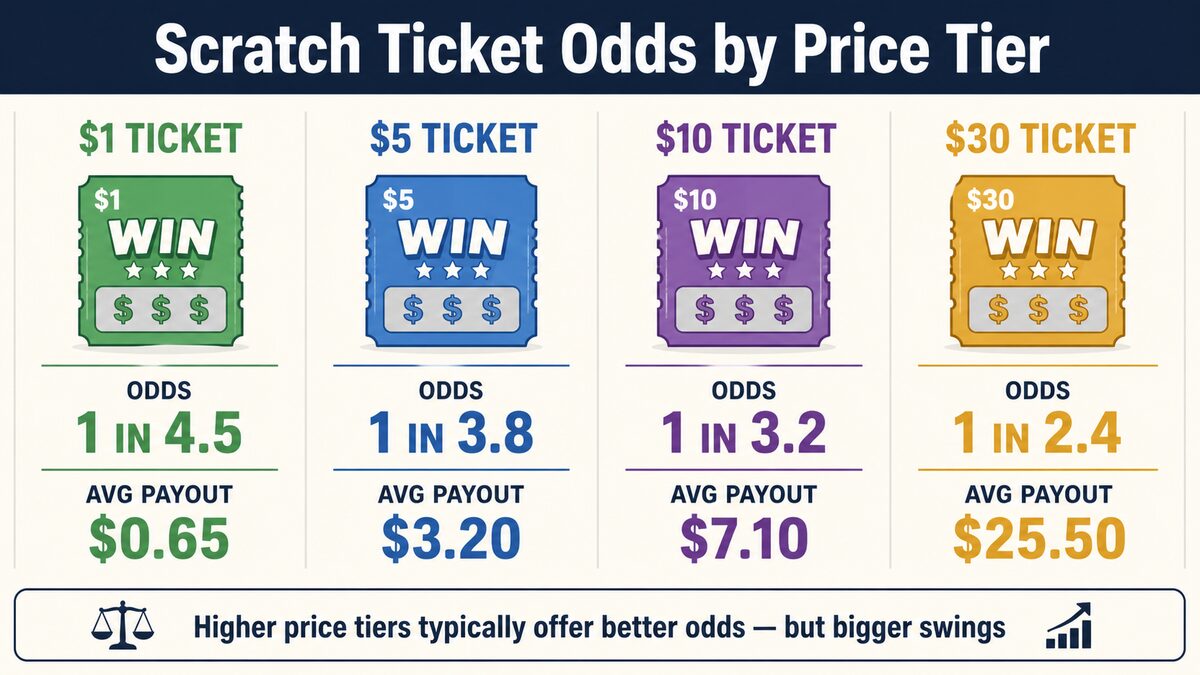
$30 tickets typically win 1 in 2.4 — best tier odds.
Moving beyond basic selection, mathematical approaches and bulk purchasing strategies help serious players extract maximum value from their scratch off ticket strategy. These techniques require more capital and tracking discipline but can significantly improve results.
Bulk Purchasing Strategy
Buying more tickets from the same game increases your statistical probability of capturing prizes within that game’s remaining pool. Here’s when and how bulk buying improves your chances:
- Calculate optimal quantity based on budget and game odds – If a game has N tickets remaining with T top prizes left, buying k tickets gives you probability approximately k × (T/N) of hitting at least one top prize. Set purchase quantity where marginal expected return justifies marginal cost.
- Select tickets from the same roll or batch – Request consecutive tickets rather than random selections. Purchasing from an entire roll or significant portion concentrates your exposure to that roll’s prize allocation.
- Track results to identify winning patterns – Maintain logs recording game name, ticket price, how many tickets purchased, prizes remaining at purchase time, and actual outcomes. Over months, this data reveals whether certain games outperform predictions.
- Adjust strategy based on performance data – If a game’s top prizes get claimed or your tracked results fall below expected value, exit that game. Reallocate to new scratch games with better current odds.
Simulation studies suggest optimal cluster sizes often fall between 5-12 tickets for most games—large enough to capture statistical probability while limiting variance exposure. A Massachusetts player famously won $20 million purchasing 150 tickets in bulk from a $30 game, demonstrating the potential upside.
Game Comparison Analysis
Comparing games systematically prevents emotional decisions and maximizes your chances of winning:
| Criterion | Game A ($20) | Game B ($20) | Game C ($30) |
|---|---|---|---|
| Overall Odds | 1 in 3.2 | 1 in 2.9 | 1 in 2.79 |
| Top Prize Amount | $500,000 | $1,000,000 | $2,000,000 |
| Top Prizes Remaining | 3 of 5 | 0 of 4 | 2 of 3 |
| Tickets Remaining | 2.1M | 1.8M | 3.2M |
| Current EV % | ~78% | ~71% | ~83% |
Game C offers the best current value despite higher cost—strong remaining top prizes relative to tickets outstanding. Game B represents a dead zone game—zero top prizes remain, making it a poor choice regardless of its advertised odds. This analysis takes minutes using state lottery data but prevents costly mistakes.
Winning scratch off games requires this kind of deliberate comparison rather than grabbing whatever catches your eye at the counter.
Common Challenges and Solutions
Even informed players encounter obstacles. Recognizing these challenges and having solutions ready keeps your strategy on track and your lottery fun intact.
Budget Management and Loss Chasing
Set a specific lottery budget before buying—daily, weekly, and monthly limits you enforce without exception. Write these numbers down and track every purchase. When you hit your limit, stop. No exceptions.
Avoid spending winnings on more tickets immediately. The psychological pull to reinvest a winning ticket’s payout creates escalation cycles. Instead, pocket at least 50% of any win as “locked” money. Recognize that the urge to chase after losing tickets—buying more to recover losses—is a warning sign. If you find yourself spending more money than planned regularly, consider whether gambling addiction resources might help.
Recognizing and Avoiding Depleted Games
Warning signs that a game has few prizes remaining:
- Zero top prizes listed on state lottery website
- Game released many months ago but still widely available
- High percentage of small-prize tiers already claimed
- Overall odds significantly worse than initially printed due to prize depletion
When you identify a depleted game, switch immediately. Don’t buy “just one more” hoping for luck. Move to games with verified remaining prizes and better current expected value. Checking further details on your local state lottery website before each purchase session prevents accidentally buying into dead zones.
Maximizing Secondary Opportunities
Many states offer second chance drawings and second chance lotteries where losing tickets enter bonus prize pools. Register your non-winning scratch ticket through lottery apps or websites—this second chance prize opportunity costs nothing extra and occasionally holds significant value.
Utilize second chance drawings systematically: keep all tickets until you’ve entered them, check submission deadlines (some states give 180 days or more), and review instructions carefully for each game’s specific entry process. Some players report winning fun prizes and even substantial payouts purely through second chance programs.
Proper ticket storage matters—keep potential winners and second-chance entries safe from damage. Always get any potential winning ticket checked before discarding, and never assume a ticket is a loser without verification.
Conclusion and Next Steps
Consistent application of these strategies won’t guarantee you win big every time, but they significantly improve scratch off success rates compared to random purchasing. The combination of verified prize data, strategic game selection, disciplined budgeting, and mathematical analysis transforms scratch off tickets from pure gambling into informed entertainment.
Immediate action steps:
- Check your local state lottery page for current games and remaining prizes
- Set your specific lottery budget for the next month—write it down
- Select your first target game based on remaining top prizes and expected value
- Begin tracking results systematically from your next purchase
Related topics worth exploring include lottery pool strategies for shared purchasing power, tax implications of significant winnings, and advanced statistical analysis methods for serious players seeking deeper mathematical edges.
Additional Resources
State lottery websites for prize tracking:
- Access your state’s lottery commission website directly for the most current remaining prizes data
- Tools like SavvyScratch, LotteryCalc, and ScratchSmarter aggregate data across states
Recommended tracking approach:
- Create a simple spreadsheet logging: date, game name, ticket price, tickets purchased, remaining top prizes at purchase, and outcomes
- Review monthly to identify patterns and adjust your scratcher strategies
Responsible gaming resources:
- National Council on Problem Gambling: 1-800-522-4700
- Set alerts on banking apps when lottery spending approaches your budget limit
- Remember that scratch games should remain lottery fun, not a financial strategy—play responsibly