How to Read a Slot Machine: A Complete Beginner’s Guide (Online & In-Person)

Slot machines look like a wall of flashing numbers, spinning pictures, and buttons that all seem to want your attention at once. If you have ever stood in front of one (or opened an online slot lobby) and felt a little lost, you are not alone, and you are not doing anything wrong. Here is the good news.
Every slot machine, whether it is a physical cabinet in a casino or a game on your phone, is built from the same small set of parts. Once you can name those parts, you can read any machine you sit down at. This guide teaches you how to read slot machines from scratch, so by the end you can walk up to one you have never seen and understand exactly what you are looking at in under five minutes.
The 60-Second Version (Read Any Slot Machine Fast)
In a hurry? Here is how to read any slot machine, online or in person, in six quick steps:
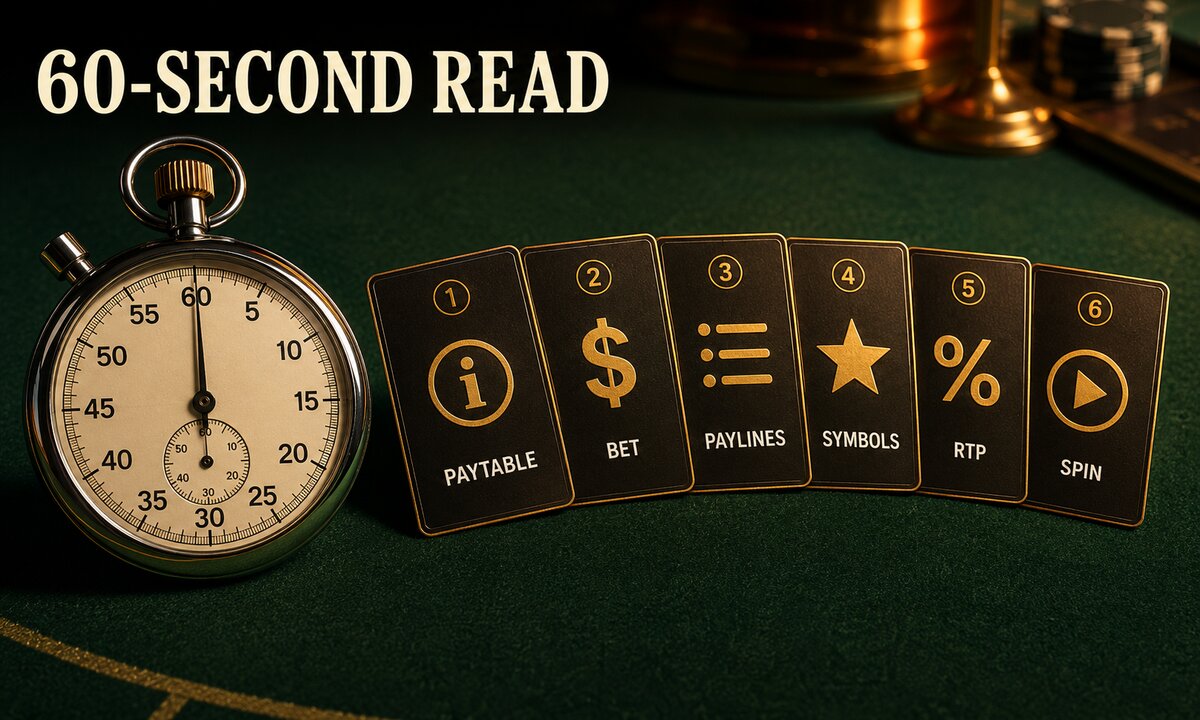
Six checks under sixty seconds.
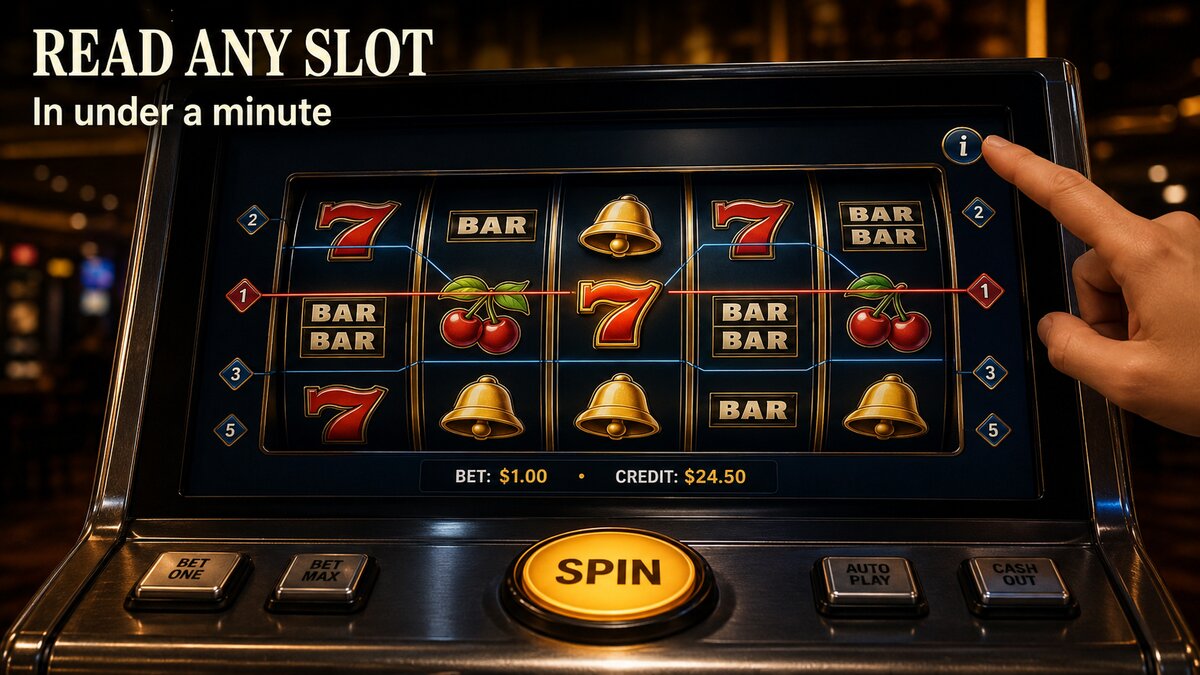
- Find the paytable. Tap the info button (usually a small “i” or a menu icon) on a screen, or look for the “see pays” or help button on a physical cabinet. This shows you what everything is worth.
- Check your bet. Find the total bet amount and the coin value or bet level. This is the money that leaves your balance on every spin.
- Note the paylines. See how many lines or “ways to win” are active and what shape they make across the reels.
- Learn the top symbols. Identify the highest-paying symbols and the special ones (wild, scatter, bonus).
- Read the RTP and volatility. Check the game info for the Return to Player percentage and how often it tends to pay.
- Spin. Set your bet, press spin, and watch where the symbols land along the paylines.
That is the whole skill in one box. The rest of this guide explains each step so you understand the why, not just the what.
The Parts of a Slot Machine (and What Each One Does)
Before you can read a machine, it helps to know its anatomy. These parts exist on almost every slot ever made, including the online slots you will find in any lobby.
Reels
Reels are the vertical strips that spin and stop to show symbols. Most slots have three to five reels. On an old mechanical machine these were physical metal hoops. On modern machines, online or in a casino, the reels are a video display, and the spinning is just an animation. When a reel “stops,” it simply settles on the symbols the game has already chosen for that spin.
Rows and the Grid
A reel is a column. The horizontal lines of symbols are rows. A common layout is 5 reels by 3 rows, which gives you a grid of 15 visible symbols. Some newer games use bigger grids, such as 6 reels by 5 rows. Knowing the difference between a reel (column) and a row matters when you start reading paylines.
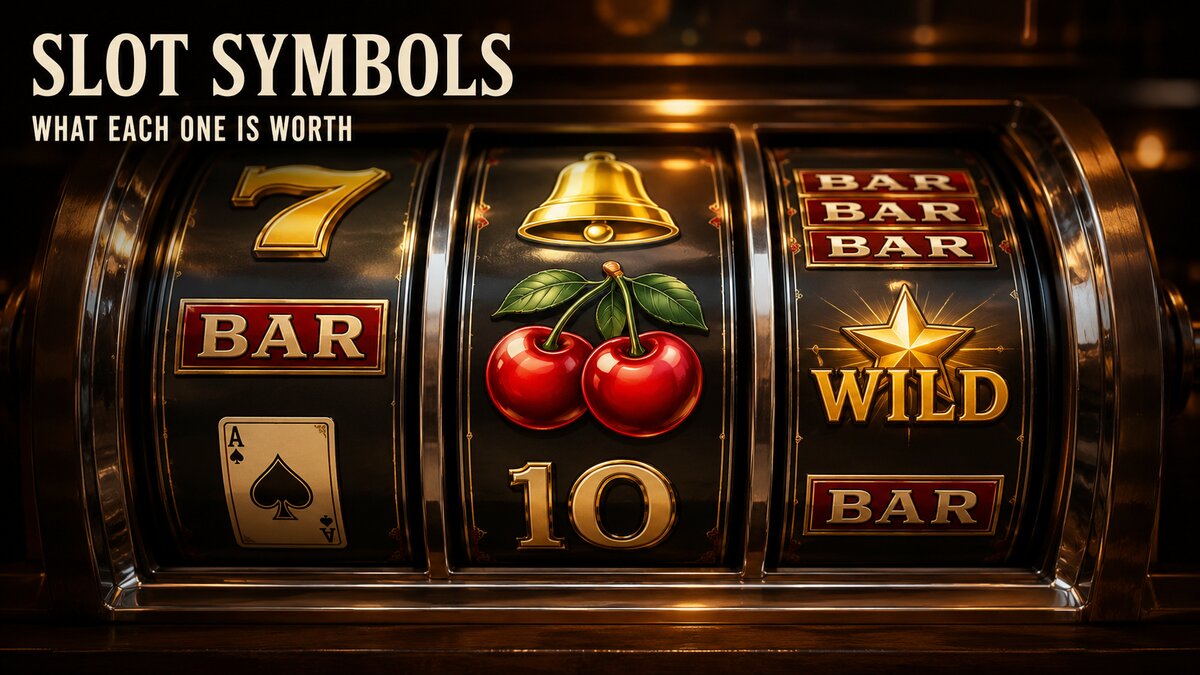
Symbols
Symbols are the pictures on the reels, and they fall into three groups.
| Symbol type | What it looks like | What it does |
|---|---|---|
| Low-value | Card royals: 10, J, Q, K, A | Pays the smallest amounts; lands often |
| High-value | Themed pictures tied to the game | Pays more; the symbols you want to line up |
| Special | Wild, scatter, bonus | Triggers extra wins or features (explained later) |
When you sit down at a new game, glance at the paytable to see which themed symbol pays the most. That is the one to watch for.
Paylines (a.k.a. Ways to Win)
A payline is a path across the reels that pays you when matching symbols land along it. By default, most paylines read left to right, starting from the leftmost reel. An “active payline” is simply a line you have bet on; if a winning combination lands on a line you did not activate, it does not pay.
Paylines come in several styles:
- Fixed paylines: Always active. You bet on all of them every spin.
- Variable paylines: You choose how many to activate.
- Pay Both Ways: Wins count left to right and right to left.
- Cluster / Pay Anywhere: Symbols pay when enough of them touch anywhere on the grid, no line needed.
- Megaways / Trueways: The number of symbols per reel changes each spin, creating up to 100,000 or more ways to win.
The Random Number Generator (RNG): How Slots Actually Decide Outcomes
This is the part that answers the bigger question, how do slot machines work. Inside every legitimate slot is a Random Number Generator, or RNG. It is a piece of software that produces numbers constantly, thousands per second, even when nobody is playing. The instant you press spin, the game grabs the current numbers and those decide where the reels stop.
Two things follow from this, and they matter for the rest of your slot-playing life. First, every spin is independent. The machine has no memory. What happened on the last spin, the last hour, or the last week tells you nothing about the next spin. Second, you cannot influence or predict the result. The animation is just for show; the outcome is already set the moment you press the button.
Trustworthy slots have their RNG tested by independent labs such as eCOGRA, iTech Labs, or GLI, and operate under a gambling regulator. That testing is what makes a fair game fair.
How to Read a Slot Machine Screen (Online Slots), Element by Element
Online slots pack everything into one screen. Here is how to read each control by where it sits.
- Balance / credit: Your available money or credits, usually bottom left.
- Bet amount: The total you are wagering per spin, often bottom center.
- Coin value / bet level: The two controls that set your bet size. Coin value is the base unit; bet level multiplies it.
- Paylines indicator: Shows how many lines are active.
- Spin button: The big round button, usually bottom right.
- Autoplay: Spins a set number of times for you.
- Max bet: Jumps your stake to the highest allowed.
- Info / paytable (i) icon: Opens the rules and payouts. This is the most important button on the screen.
- Win line and win amount: When you win, the game highlights the line and shows what you won.
- Bonus / feature meter: Tracks progress toward a special feature, if the game has one.
Spend ten seconds locating the (i) button and the bet controls on any new game and you are already reading it like a regular.
How to Read a Physical Slot Machine (In a Casino)
A casino cabinet has a few parts an online game does not. Here is what they are and what they do.
The Denomination
The denomination is the base coin value of the machine: penny, nickel, dollar, and so on. Important: the denomination is not what you actually bet. A “penny” slot rarely costs one cent to play, because you bet many lines and credits at once. Always check the total bet on the screen, not the denomination on the sign.
The Credit Meter vs Cash
Money you load goes onto the credit meter as credits. On a penny machine, $1 buys 100 credits. Your wins are added in credits too. To know the cash value, multiply your credits by the denomination.
The Button Panel
The physical buttons typically include Bet One, Bet Max, Lines (or Select Lines), Spin, Cash Out, and a Service or Help button. Many machines also have a touchscreen that does the same things.
The Candle (Tower Light)
The candle is the lamp on top of the cabinet. It signals staff. A flashing or colored candle can mean you pressed the service button, the machine needs change, there is a jackpot or hand pay to process, or there is a fault. If yours lights up, an attendant is on the way.
TITO Tickets (Ticket In, Ticket Out)
Modern machines do not pay coins. When you press Cash Out, the machine prints a paper voucher with a barcode showing your balance. This is a TITO ticket. You can insert it into another machine to keep playing or take it to a cashier or kiosk to redeem for cash.
Hand Pays and Taxable Wins
If you hit a win larger than the machine is set to pay out automatically, the reels lock, the candle lights, and an attendant pays you directly. This is a hand pay. In the United States, slot wins of $1,200 or more typically trigger a tax form called a W-2G. This is general information, not tax advice; check the rules for your region.
How to Read a Slot Machine Paytable (Step by Step)
The paytable is where you learn how to read payouts on slot machines. It is the single most useful screen in the game, and most beginners never open it.
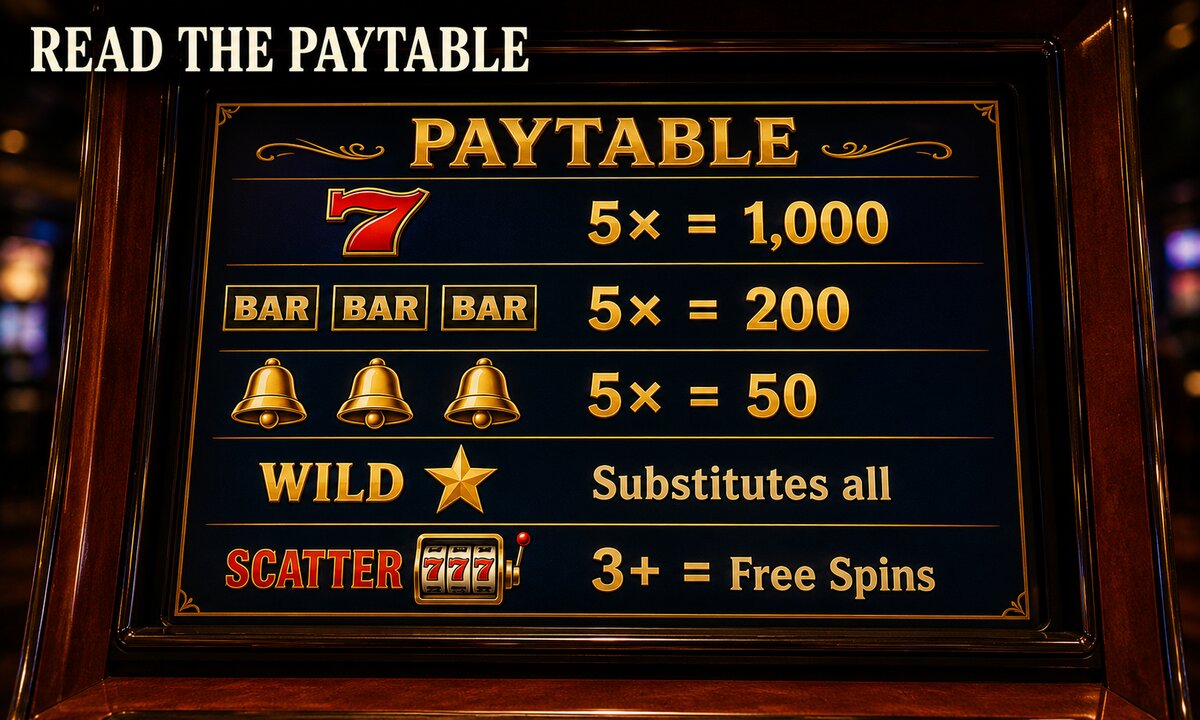
Top symbol = jackpot; wild substitutes.
Step 1: Find it. Tap the info or (i) icon online, or press “see pays” / the help button on a cabinet.
Step 2: Read the symbol payouts. The paytable lists each symbol and what 3, 4, or 5 of them pay. Payouts are usually shown as a multiple of your line bet.
Worked example (multiplier payout): Suppose 5 King symbols pay 10x your line bet, and your line bet is $0.20. Your win is 10 x $0.20 = $2.00.
Step 3: Understand coin payouts vs multiplier payouts. Some older games show payouts in coins instead of as a multiple of your stake. You then multiply coins by your coin value.
Worked example (coin payout): A symbol pays 500 coins, and your coin value is $0.05. Your win is 500 x $0.05 = $25.00. Same idea, just expressed in coins instead of “times your bet.”
Step 4: See what triggers features. The paytable tells you the rules for special symbols, for example, “3 or more scatters anywhere awards 10 free spins.”
Step 5: Find min and max bet. The paytable or bet menu shows the smallest and largest allowed stake, and the bet per line. Always know your per-spin cost before you start.
How to Read Bingo Patterns on Slot Machines (Class II Slots)
Here is something most slot guides skip entirely. On many tribal casino floors in the United States, machines that look exactly like normal slots are actually electronic bingo games. These are called Class II machines. The spinning reels are just a display; the real result comes from a bingo draw shared among everyone playing that bank of machines.
Reading the Bingo Card and Pattern
On a Class II machine, look for a small bingo card, usually tucked in a corner of the screen. When you play, the system draws bingo numbers and daubs (marks) your card. The pattern your card completes determines your prize, and the reels then spin to a result that matches that prize. So the symbols you see are a translation of a bingo outcome, not an independent spin.
Because the draw is shared, you can be competing against other players for the same prize pool, which is different from a standard slot where your result is yours alone.
How to Tell Class II from Class III
A standard RNG slot is called Class III. To spot the difference, look for a small bingo card on the screen, a daub or “card” indicator, or wording in the help screen mentioning bingo. If you see those, you are on a Class II bingo machine. If you only see a paytable and reels with no bingo card, it is most likely a Class III RNG slot. Neither is “better”; they just decide outcomes differently.
RTP and Volatility: How to Read a Slot’s “Odds”
This is where you learn to read the odds honestly. Two numbers describe a slot’s behavior: RTP and volatility.
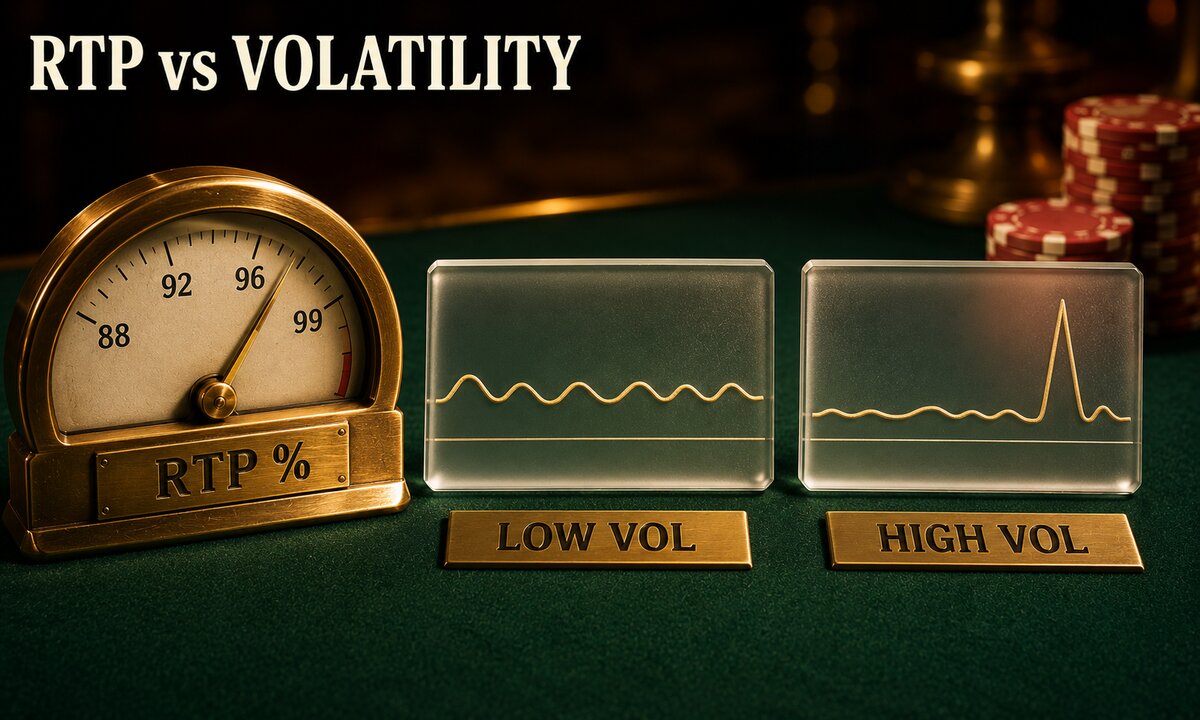
RTP = average; volatility = swing.
RTP (Return to Player)
RTP is the percentage of all money wagered that a slot is designed to pay back over the very long run. Typical online slots run between 94% and 98%, with around 96% common.
Worked example: A 96% RTP means that across millions of spins, the game returns about $96 for every $100 wagered, keeping roughly $4 as the house edge. This is a long-run average across all players, not a promise for your session. In a single sitting you might win big or lose it all; RTP does not protect any one player.
Volatility (Variance)
Volatility tells you the shape of the wins. Low-volatility slots pay small amounts often. High-volatility slots pay rarely but larger. Neither pays more overall; RTP governs that. Volatility just decides whether your session feels like a steady drip or a long wait for a big splash.
| Feature | Low volatility | High volatility |
|---|---|---|
| Win frequency | Often | Rarely |
| Typical win size | Small | Large |
| Best suited to | Longer, steadier play | Chasing big wins, shorter sessions |
| Bankroll swings | Gentle | Sharp |
Hit Frequency
Hit frequency is how often any win lands at all, regardless of size. A game can have a high hit frequency (lots of small wins) yet high volatility for its big payouts. You will usually find RTP, and sometimes volatility, in the game info screen, on the provider’s website, or in regulator filings.
Slot Machine Features and Bonus Mechanics (Glossary You’ll Actually Use)
These are the terms you will meet across slot machine games. Here is what each means and why it matters.
| Feature | What it is | Why it matters |
|---|---|---|
| Wild | Substitutes for other symbols to complete wins | Turns near-misses into wins |
| Expanding wild | A wild that grows to cover a whole reel | Can create multiple line wins at once |
| Sticky wild | A wild that stays in place for several spins | Builds bigger wins over time |
| Walking / roaming wild | A wild that moves one position each spin | Extends its usefulness across spins |
| Multiplier wild | A wild that multiplies the win it completes | Boosts payout size |
| Scatter | Pays anywhere on the grid, no payline needed | Usually triggers free spins |
| Bonus symbol | Triggers a special bonus round | Gateway to the biggest features |
| Free spins | Spins that cost nothing from your balance | The most common bonus |
| Multiplier | Multiplies a win by 2x, 3x, and so on | Inflates payouts |
| Re-spin | Re-spins selected reels | A second chance at a win |
| Cascading / Avalanche / Tumbling reels | Winning symbols vanish and new ones drop in | Chains multiple wins from one spin |
| Progressive jackpot | A prize that grows as players bet | Can reach life-changing sums (more below) |
| Bonus round / pick-me game | An interactive feature screen | Often the most fun and rewarding part |
| Auto spin | Spins automatically for a set count | Convenience; set limits when you use it |
| Gamble feature | Double-or-nothing on a win | High risk; can wipe a win instantly |
| Buy feature / bonus buy | Pay extra to jump straight to the bonus | Costs more; not available everywhere |
A quick word on progressive slots. A progressive jackpot grows every time someone bets, and it can be local (pooled on one casino’s machines) or networked / wide-area (pooled across many casinos for a much bigger prize).
How to Spot Slot Myths (and Read the Odds Honestly)
If you remember the RNG section, most slot myths fall apart on their own. Here are the big ones.
- “This machine is due to hit.” False. Because every spin is independent, a machine that has not paid in hours is exactly as likely to pay on the next spin as one that just paid. This is the gambler’s fallacy.
- “Higher denomination always pays better.” Higher-denomination machines sometimes carry a higher RTP, but that is a design choice, not a guarantee, and it means betting more money per spin. It does not make you more likely to win your session.
- “I can tell which machine will hit next.” No one can. The RNG makes outcomes unpredictable by design, and no pattern, timing trick, or hot streak changes that.
- “Hot and cold machines are real.” A machine that just paid out is not “hot,” and a quiet one is not “cold.” Past results have zero effect on future spins.
Read honestly, a slot is entertainment with a built-in house edge. That is not a scam; it is the price of the show, the same way a movie ticket is. Knowing this is what separates a confident player from a frustrated one.
Responsible Gambling: Reading Your Own Limits
The most important thing to read at a slot machine is yourself.
- Set a budget before you play, and treat any losses as the cost of entertainment, like a night out.
- Never chase losses. The house always has an edge, so trying to win back a loss usually deepens it.
- Set a time limit too, and take breaks. The flashing screens are designed to keep you in the seat.
- If gambling stops being fun, or starts affecting your money, mood, or relationships, reach out for support.
If you need help, contact the National Problem Gambling Helpline at 1-800-GAMBLER, available 24/7. Slots are for players who are of legal age, which in the United States is 21 and over for most casino floors. For more on playing safely, see our responsible gambling guide.
Frequently Asked Questions
How do you read a slot machine?
How do you read slot machine paylines?
How do you read slot machine payouts?
How do you read the bingo card or patterns on a slot machine?
How do slot machines work?
What do the symbols on a slot machine mean?
How do I know how much I won?
What’s a good RTP for a slot machine?
Can you tell which slot machine will hit next?
How do you read a slot machine for beginners?
Conclusion
Reading a slot machine is not a special talent; it is a short checklist. Find the paytable, check your bet, count the paylines, learn the symbols, and read the RTP, and you can sit down at any machine, online or in a casino, and know exactly what you are looking at. The flashing lights are designed to feel complicated, but the machine underneath is simple and the same every time. Play for fun, set your limits before you start, and let the entertainment be the point.