Slot Machine Odds: How They Work and What Your Real Chances Are

Slot machine odds describe your probability of landing a winning combination on any given spin, and the real numbers are steeper than most players assume. The chance of hitting a top jackpot runs from about 1 in 262,144 on a simple three-reel game to 1 in 49.8 million on Megabucks, while Nevada machines as a group returned 92.91 percent of the money wagered in them over the past year.
This guide walks through the actual math, the current regulator data behind payback percentages, and the machine choices that genuinely reduce the house edge. One honest note before any of it: no strategy changes a machine’s programmed odds. The goal here is making informed choices, not chasing guaranteed wins.
What Are the Odds of Winning on a Slot Machine?
On a typical slot machine you will land a win of some size roughly once every 3 to 5 spins, a hit frequency of about 20 to 35 percent. Top jackpot odds are far longer, ranging from around 1 in 5,000 on simple machines to 1 in 49.8 million on the largest wide-area progressives.
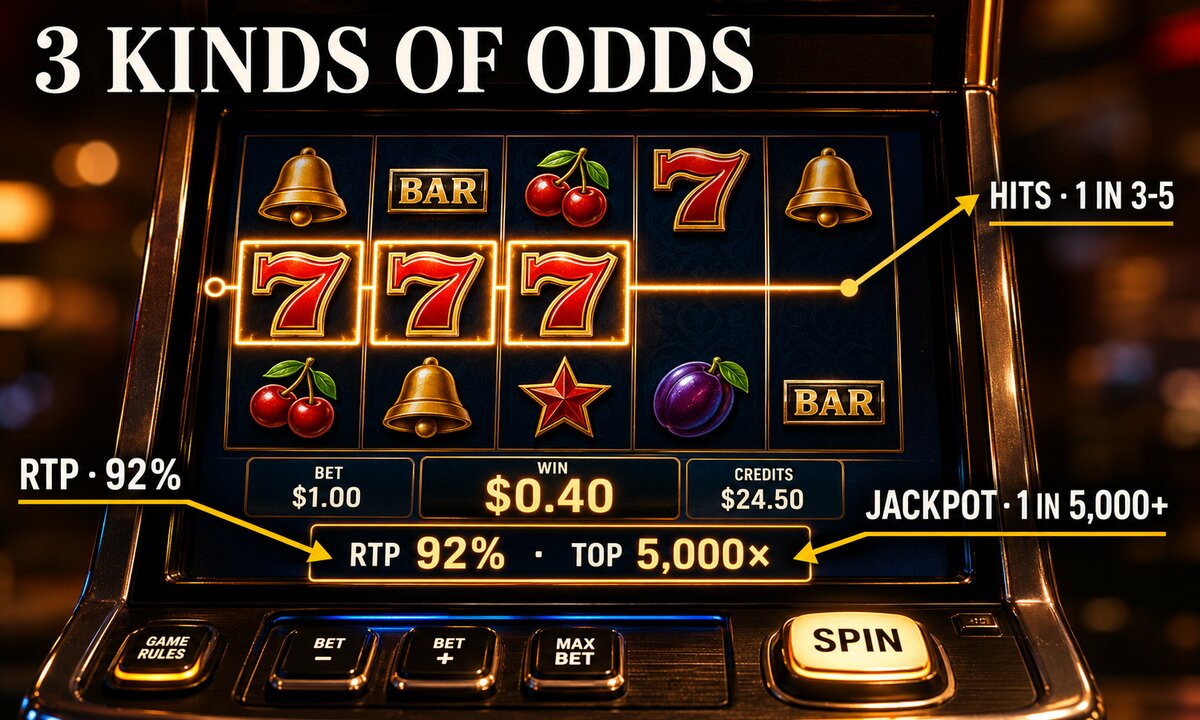
Three different odds — most players confuse them.
Those two figures sound contradictory until you separate the three numbers people tend to lump together. They measure completely different things, and confusing them is where most misunderstandings about slot odds begin.
| Outcome | Approximate odds | Notes |
|---|---|---|
| Any winning combination | ~1 in 3 to 1 in 5 spins | Hit frequency of roughly 20-35% is a common design range |
| Win larger than your total bet | Considerably rarer | Many multiline “wins” pay back less than the spin cost |
| Bonus feature trigger | Not disclosed for most titles | Set by the game’s math model; rarer than line wins by design |
| Top jackpot, classic 3-reel (64 virtual stops per reel) | 1 in 262,144 | Full calculation shown below |
| Megabucks top jackpot ($3 bet required) | 1 in 49,836,032 | Per the widely cited 368-stop reel analysis |
Here is the distinction that matters. Hit frequency tells you how often you win anything at all. Payback percentage, also called return to player or RTP, tells you what share of all money wagered the machine returns over the long run. Jackpot probability is the chance of one specific outcome, the top prize.
A machine can pay something on a third of its spins and still keep 9 cents of every dollar, because most of those payouts are small. And jackpot odds vary enormously by design: top-prize chances span from roughly 1 in 5,000 on modest classic machines to tens of millions to one on linked progressives. Bigger jackpots require rarer combinations, since the prize money has to come from somewhere.
How Slot Machine Odds Work
Every modern slot machine decides its outcomes with a random number generator (RNG) that runs continuously, whether or not anyone is playing. The reels you watch spin are a display of a result that was already determined the instant you pressed the button.
The Random Number Generator
The RNG cycles through thousands of numbers per second. When you hit spin, the game grabs the number active at that exact moment and maps it to reel positions. Pressing the button a fraction of a second earlier or later would produce a completely different result.
Each spin is independent and memoryless. The machine does not know or care what happened on the previous spin, and in regulated markets the RNG is tested by independent labs such as GLI and by state gaming commission testing labs before a game can go on the floor. If you want a plain-language walkthrough of how all of this plays out in a real session, this guide on how to play online slots covers the practical side.
Virtual Reels and Weighted Symbols
Here is the mechanism most articles skip. The reel you see might show 22 physical stops, but each stop is mapped to a much larger virtual reel held in software, often with hundreds of positions. The jackpot symbol may be assigned to only one or two virtual stops, while blanks and low-pay symbols are assigned to dozens.
This weighting is also why near misses feel so common. The virtual stops directly above and below a jackpot symbol are typically weighted heavily, so the jackpot symbol lands just off the payline far more often than chance on the visible reel would suggest. The near miss is a byproduct of the math, not a sign you were close.
Par Sheets and the EPROM
Every slot game has a par sheet, the manufacturer’s confidential math document that defines the reel strips, symbol weightings, and theoretical return. Casinos do not tweak this on the fly. They order the game with a chip, historically an EPROM, set to one of several factory return levels.
A single title commonly ships in versions ranging from roughly 85 percent to 98 percent RTP. That means two identical-looking machines sitting side by side can be set to meaningfully different paybacks, and nothing on the cabinet tells you which is which.
One consequence worth stating plainly: machines are never “due.” There are no hot or cold cycles on a standard RNG slot. The single notable exception is the UK-style fruit machine, where a compensator mechanism can adjust short-term payouts toward a target percentage, but that design is not used in US casino slots.
How to Calculate Slot Machine Odds (Worked Examples)
You can calculate jackpot odds on a classic three-reel machine by raising the number of virtual reel stops to the power of the number of reels, then dividing by the number of jackpot symbols. Three reels with 64 virtual stops each produce 262,144 combinations.
Worked example 1: a classic three-reel game.
Total combinations: 64 × 64 × 64 = 262,144. With one jackpot symbol per reel, exactly one combination hits the top prize. Jackpot odds: 1 ÷ 262,144, or about 0.00038 percent per spin.
Worked example 2: Megabucks.
Analysis cited by gambling mathematician Michael Shackleford puts each Megabucks reel at 368 virtual stops with one jackpot symbol. That gives 368 × 368 × 368 = 49,836,032 combinations, so the jackpot probability is 1 in 49,836,032 per $3 max-bet spin. For scale, you are about six times more likely to win that jackpot than the Powerball, and you would still expect to wait tens of millions of spins.
On modern video slots you cannot run this calculation at all. The symbol weightings are confidential, which makes slots the only major casino game where the full odds are hidden from the player. What you can know is the RTP, when it is published, and that is enough for the number that actually affects your wallet.
Worked example 3: your expected hourly loss.
The formula is simple: spins per hour × average bet × house edge = expected hourly loss. The house edge is just 100 percent minus the RTP.
A fast player on a video slot makes around 600 spins per hour. At $1.25 per spin on a machine holding 8 percent, that is 600 × $1.25 × 0.08 = $60 of expected loss per hour. Individual sessions swing wildly in both directions, but this is the long-run gravity every session is pulled toward.
Those three inputs, spin speed, bet size, and house edge, are all you need to act as your own slot odds calculator. They also answer the question behind the math: regular play cannot produce a long-run profit, because the expected value of every spin is negative. The more spins you make, the more closely your results converge on that number.
Slot Machine Payback Percentages: The Real Data
Nevada slot machines returned 92.91 percent of all money wagered in them over the twelve months ending January 2026, according to the Nevada Gaming Control Board’s Gaming Revenue Report published in February 2026. That figure is the inverse of the statewide “win percent,” or hold, of 7.09 percent.
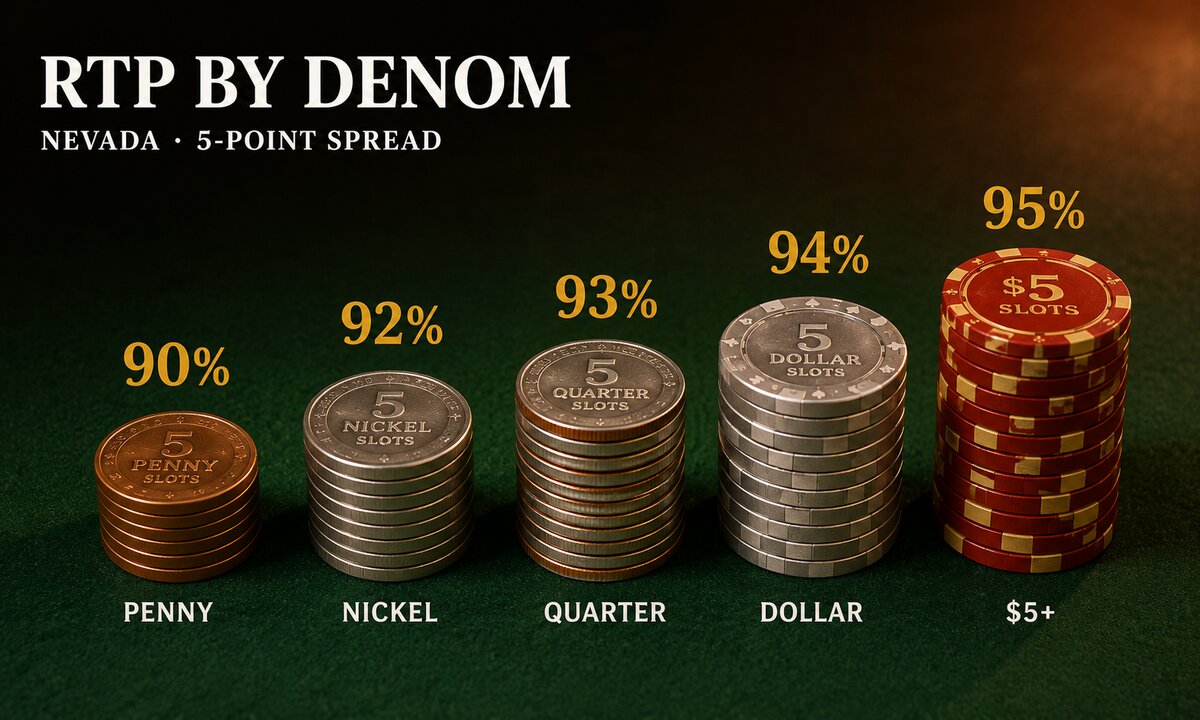
Higher denom = higher RTP in Nevada.
Three terms, quickly. RTP or payback percentage is what players get back long term. House edge is 100 minus RTP, the casino’s mathematical cut. Hold or win percent is what regulators report: actual money kept divided by money played.
The denomination pattern in the current data is striking, and it punishes the smallest bettors hardest.
| Denomination | Hold (casino win %) | Player payback % |
|---|---|---|
| 1 cent (penny slots) | 8.98% | 91.02% |
| 25 cents | 7.55% | 92.45% |
| $1 | 6.27% | 93.73% |
| $5 | 4.73% | 95.27% |
| $25 | 6.71% | 93.29% |
| Multi-denomination | 6.89% | 93.11% |
| All slot machines | 7.09% | 92.91% |
Source: Nevada Gaming Control Board Gaming Revenue Report, January 2026 edition, statewide twelve-month figures (February 2025 through January 2026).
Location matters almost as much as denomination. The UNLV Center for Gaming Research tracks hold by Nevada reporting area from 2004 through 2026 and finds the Las Vegas Strip holds the most of any area, about 45 percent more than Reno, the loosest reporting area. Michael Shackleford’s casino-by-casino survey found the same ranking back in 2001-02, with off-Strip and locals’ casinos beating Downtown, and Downtown beating the Strip. The pattern has now held for more than two decades.
Online slots are a different market. Published RTPs commonly sit between 94 and 97 percent, higher than land-based penny machines, partly because digital games carry no floor-space overhead. NetEnt’s Blood Suckers publishes a 98 percent RTP and IGT’s Cleopatra lists 95.02 percent, and you can verify figures like these in each game’s help screen before betting. Browsing online slots in demo mode is the easiest way to check a title’s published RTP, and this roundup of the best RTP slot machines collects the standouts.
Be honest about the extremes, though. Some machines hold far more than the averages above. Airport slots and high-jackpot progressives are the usual offenders, with estimates of the worst cases reaching a house edge around 35 percent, and Megabucks itself has returned roughly 88.6 percent over its long history per NGCB data compiled by Shackleford.
Which Slot Machines Have the Best Odds?
Higher-denomination, non-progressive machines at locals’ casinos away from the Las Vegas Strip offer the best slot odds, with $5 machines returning 95.27 percent statewide in Nevada’s current data. And if the best odds are your actual goal, full-pay video poker beats nearly every slot machine on the floor.
The same answer covers the phrasing variants people search: whichever slot machine has the best odds in your casino, it is almost certainly a simple, higher-denomination, non-progressive game, or a high-RTP online title with its return published.
| Machine type | Typical return | Volatility | Top jackpot odds |
|---|---|---|---|
| Classic 3-reel | 93-95% at $1+ denoms (NGCB) | Low to medium | ~1 in 262,144 (64-stop example) |
| Video slot, multiline | ~91% land-based penny (NGCB) | Medium to high | Undisclosed; often millions to one |
| Megaways / online multiline | 94-97% published | High | Varies; published per title |
| Wide-area progressive (Megabucks) | ~88.6% long-run | Extreme | 1 in 49,836,032 |
| High-RTP online slot | 96-98% published | Low to medium | Disclosed in help screens |
“Loose Slots”: What Is Actually True
A loose slot is simply a machine set to a higher payback level on its par sheet. The placement myths are false: Shackleford’s survey work found machines at aisle ends, near doors, and near table games tested no better than anywhere else. Looseness is ordered from the factory, not arranged on the floor.
Where loose machines really live is competitive locals’ markets, where casinos fight for regular customers, which is exactly what the off-Strip data above shows. Online, the closest equivalent is sorting by published RTP. You can even try Vegas slots in free versions first to compare titles without wagering anything.
The Denomination Rule, With Its Big Caveat
Higher denominations pay back more, but your expected loss is bet × edge, not a percentage in the abstract. One quarter line on a 92.45 percent machine costs 600 × $0.25 × 0.0755 ≈ $11 per hour. Covering 100 lines at a penny each on a 91.02 percent machine costs 600 × $1.00 × 0.0898 ≈ $54 per hour.
So the “better odds” machine is only cheaper if you do not scale your bet up with it. Penny slots stopped being a cheap night out the moment they became 100-line games.
A practical checklist for finding better odds:
- Check the help screen for a published RTP, which most online titles and some land-based games display.
- Prefer non-progressive games; jackpot meters are funded by lower base returns.
- Prefer simpler games; elaborate licensed themes and giant cabinets tend to carry higher holds.
- Look up your own state gaming commission’s payout reports, since most US states publish them just like Nevada does.
- Trial games in free play first so paid spins go to titles whose math you already know.
Can You Improve Your Odds on Slot Machines?
No strategy can change a slot machine’s programmed odds; the only real slot machine strategy is choosing better machines and slowing your expected loss. Every system that claims otherwise fails the same math from the worked examples above.
What genuinely helps:
- Pick higher-RTP games, the single biggest controllable factor.
- Bet max only when the paytable requires it for jackpot or bonus eligibility. On many modern games max bet unlocks nothing, so check before you press it.
- Use free play offers, comps, and promotions, which are the only real positive value a casino hands out.
- Slow your spin rate. Half the spins per hour means half the expected hourly loss.
- Set a loss limit and bank wins, which is basic bankroll management and the difference between a budgeted night and a bad one.
And the persistent myths, each against the actual mechanics:
Myth: machines run hot and cold. Every spin is an independent RNG draw. Streaks exist only in hindsight.
Myth: slots pay better at certain times. The RNG has no clock. Time of day, day of week, and crowd size change nothing.
Myth: a machine that has not hit is due. Jackpot odds are identical on every spin, one second or ten years after the last hit.
Myth: a near miss means you almost won. Near misses are a deliberate artifact of virtual reel weighting, not proximity to a prize.
Myth: high volatility machines pay big wins frequently. It is the opposite. High volatility means larger payouts that arrive less often; low volatility means smaller, more frequent wins.
A final word that belongs in any honest article on this topic. The expected value of slot play is negative, so treat every dollar you put in as entertainment spending, never as an investment or a way to recover losses. If gambling stops feeling like entertainment, free confidential help is available in the US at 1-800-GAMBLER.
Slot Odds vs Other Casino Games
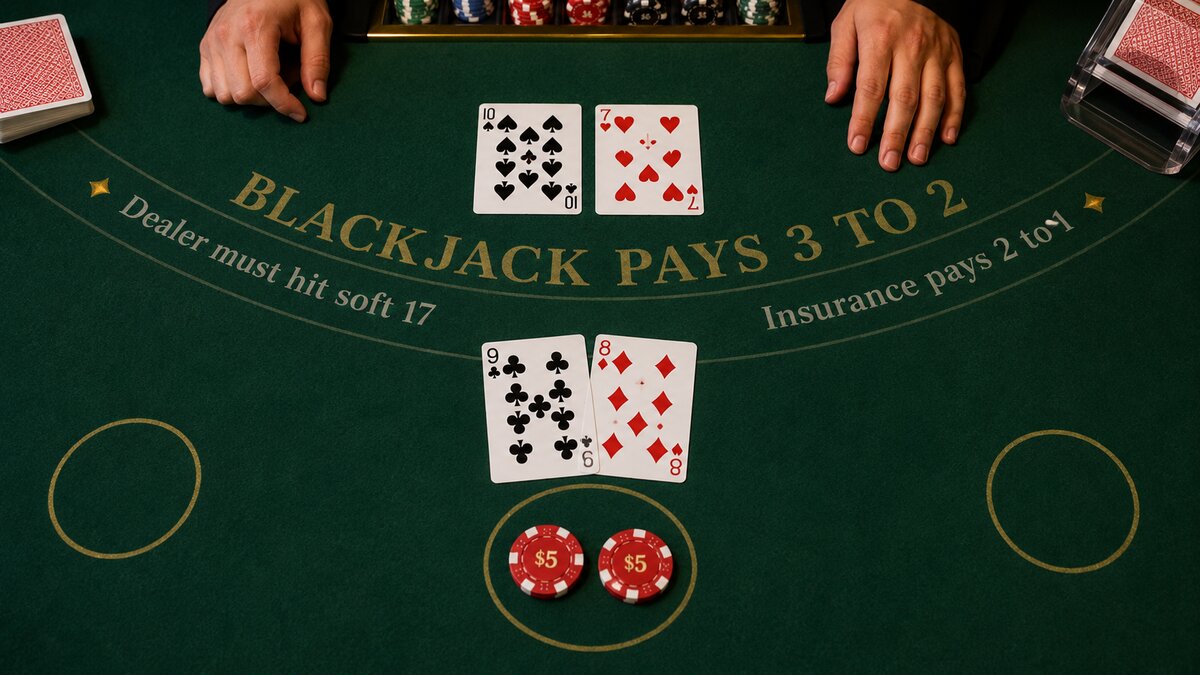
Slots carry a house edge of roughly 2 to 15 percent or more, while blackjack played with basic strategy gives up only about 0.5 percent. By the numbers, slots sit near the bottom of the casino floor.
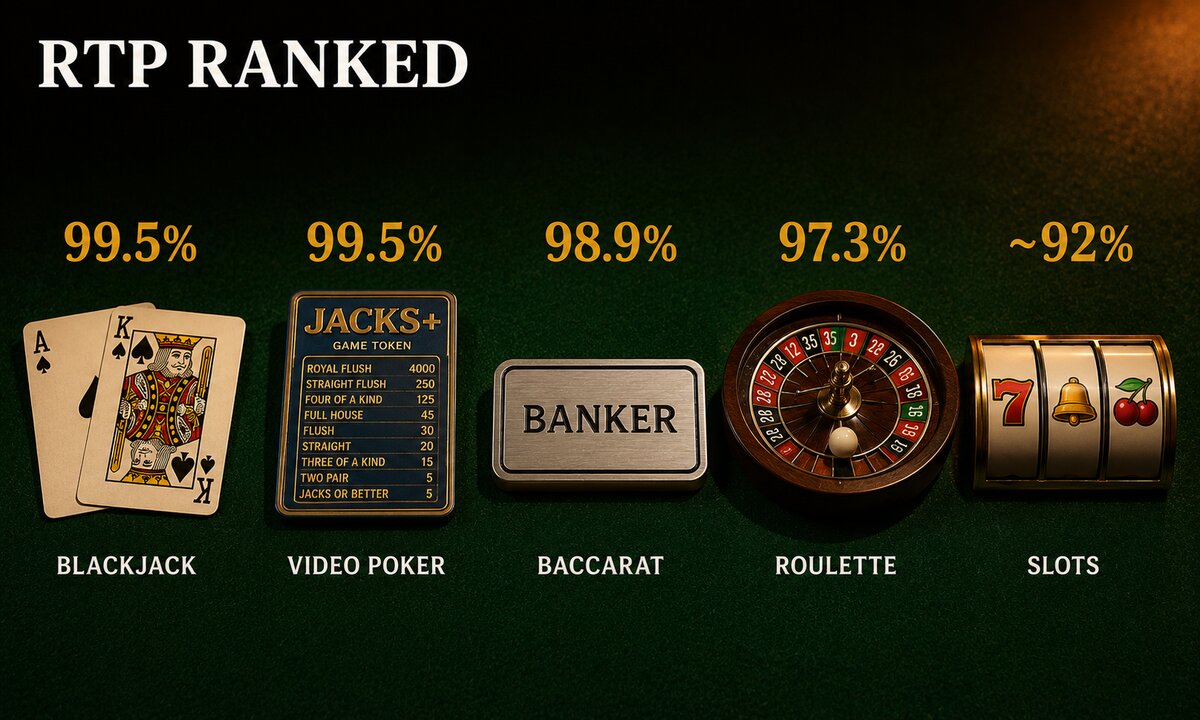
Slots have the steepest house edge.
| Game | Approximate house edge |
|---|---|
| Video poker (9/6 Jacks or Better, optimal play) | 0.46% |
| Blackjack (basic strategy) | ~0.5% |
| Baccarat (banker bet) | 1.06% |
| Craps (pass line) | 1.41% |
| Roulette (single zero) | 2.70% |
| Roulette (double zero) | 5.26% |
| Slot machines | ~2% to 15%+ |
| Keno | 20-35% |
Slots combine one of the worst average edges with the least transparency, since the full odds are confidential. What you get in exchange is the only realistic shot at a life-changing jackpot from a small bet, zero skill requirement, and a slower bleed than the percentages suggest when you bet small and play slowly. Whether that trade is worth it is a personal call, but now it is at least an informed one.