Arizona and New Hampshire Expand Efforts to Address Problem Gambling

Arizona and New Hampshire have announced new initiatives aimed at reducing gambling-related harm, reflecting growing concern among policymakers about the social consequences of a rapidly expanding gaming landscape. The move comes amid broader industry growth highlighted in reports such as record number of Americans engaging in legal gambling.
While the two states are taking different approaches, both efforts focus on prevention, education, and long-term harm reduction.
Arizona Launches Public-Focused Training Program
In Arizona, the Department of Gaming has introduced a free Responsible Gaming Training initiative designed to educate residents about the risks associated with gambling. The program is structured as a three-hour, self-paced online course divided into three phases, with optional quizzes and flexible access for participants.
The training covers key topics such as the distinction between responsible play and problem gambling, the risks tied to gaming activities, and ways individuals can seek help or support others gambling-related issues. The initiative is open not only to industry professionals but also to the general public, including those who may not actively participate in gambling.
Jessica Roza, Assistant Director of Government and Community Affairs at the Arizona Department of Gaming, emphasized the broader goal of the program, stating: “Offering this responsible gaming training is about increasing knowledge, confidence, and skills that make a tremendous difference in improving the conversations and interactions we may encounter day-to-day.”
She added that the initiative is part of a wider effort to create “a safer, more sustainable gaming environment,” highlighting the importance of public awareness in addressing gambling-related harm.
The training comes in response to data indicating that gambling disorder affects approximately three to four percent of Arizonans aged 21 and older. By expanding access to educational resources, state officials hope to equip individuals with the tools needed to make informed decisions and recognize problematic behavior early.
This effort builds on other state-level actions such as Arizona’s free peer support program to help with gambling problems, signaling a growing emphasis on community-based intervention.
To further promote the initiative, the department has scheduled a live virtual webinar on April 28, 2026, where Roza will introduce the curriculum and engage with community members.
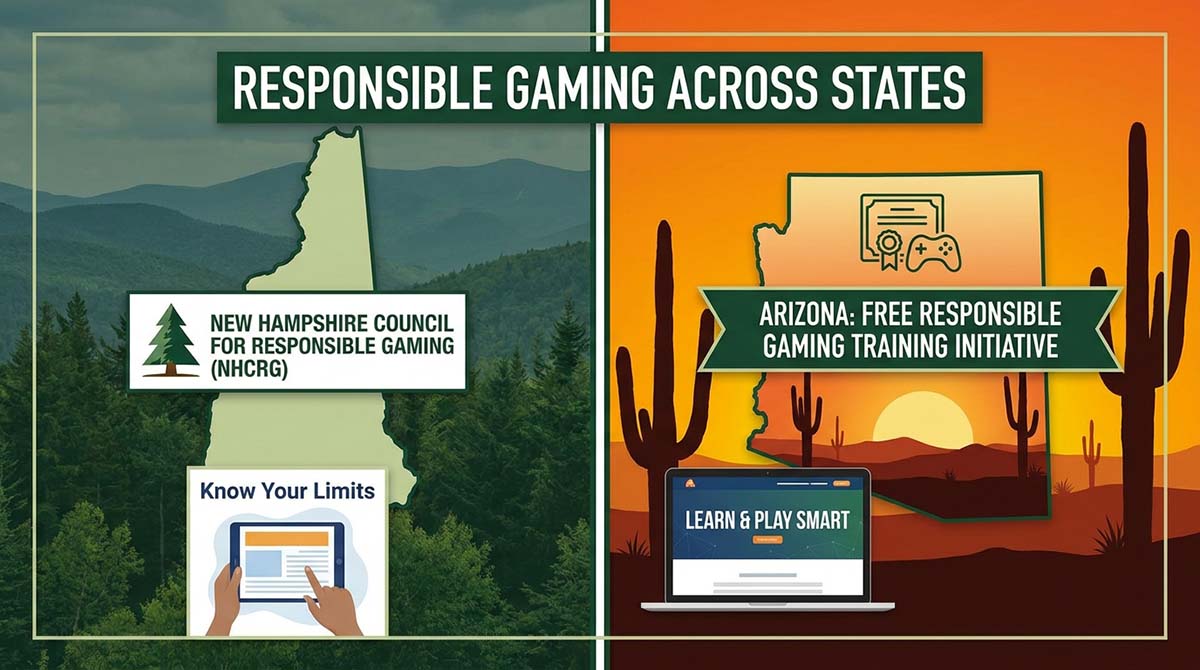
Arizona focuses on education, while New Hampshire seeks to mitigate the effects of an already expanded industry.
New Hampshire Responds to Rapid Industry Growth
In contrast to Arizona’s education-focused approach, New Hampshire is addressing gambling harm through institutional reform. The state recently launched the New Hampshire Council for Responsibility Gaming (NHCRG), a body tasked with tackling the growing challenges associated with gambling addiction.
The council’s formation follows a decade of rapid expansion in New Hampshire’s gaming sector. What began as limited charitable gaming has evolved into a broader industry that includes 13 casinos and a thriving sports betting market. Since its launch in 2019, sports betting alone has generated more than $153 million in revenue for the state, with tens of millions contributed annually.
However, officials now acknowledge that this growth has come with unintended consequences.
Former state senator and council board member Lou D’Allesandro said:
When you have gaming and an expansion of gaming at this level, you would invite problems, and the problems are addiction, you’ve got to have something in place to deal with this, and the Council for Responsible Gambling is going to create that.
State leaders have also pointed to the need for more proactive measures. Senator Tim Lang noted that policymakers are effectively trying to catch up with the pace of industry growth, admitting:
We are behind 8 ball on this topic, and we’re trying to play catch-up.
Harm Reduction Measures and Future Outlook
Alongside the council’s launch, New Hampshire has already begun implementing practical harm reduction strategies. A newly introduced statewide self-exclusion program allows individuals to ban themselves from all casinos through a single registration, replacing a previously fragmented system that required separate requests at each venue.
The council is also exploring healthcare-based interventions. Board member Jum Rafferty has proposed integrating gambling addiction screening into the routine medical intake process, signaling a shift toward treating problem gambling as a public health issue.
Rafferty underscored the urgency of the situation during the council’s launch, stating:
You know, the fact of the matter is every 17-year-old has a casino in their pocket. And in some cases, that’s unhealthy for people and they don’t know how to get out.
His remarks highlight the increasing accessibility of gambling on digital platforms, particularly among younger populations.