When Is the Best Time to Go to the Casino: A Complete Guide to Optimal Casino Timing

Introduction
Casino games operate on fixed mathematical odds that remain identical whether you visit at 3 AM on a Tuesday or 10 PM on Saturday night. However, the timing of your casino visit significantly impacts your overall experience, affecting everything from table minimums to crowd density and the atmosphere on the casino floor.
This guide covers optimal timing for different casino experiences based on your personal preferences for crowds, costs, and atmosphere. It does not promise better odds or increased chances of a big win based on when you play—because those factors simply don’t change with timing. The target audience includes casino visitors seeking to maximize comfort, value, and enjoyment rather than those believing in timing-based luck or common myths about slot machines paying more at certain hours.
The best time to go to the casino is Tuesday through Thursday between 10 AM and 3 PM if you want low crowds, lower table minimums, and a relaxed environment. For energy, live entertainment, and a lively atmosphere, Friday night and Saturday night evenings deliver the full social experience—though at higher cost.
By the end of this guide, you will understand:
- Weekly and daily crowd patterns at most casinos
- How costs and table minimums fluctuate by day of the week and time
- The atmosphere differences between peak hours and off peak hours
- Why popular myths about casino timing are false
- Practical timing strategies based on your gambling goals
Understanding Casino Operations and Timing Factors
Casinos operate 24/7 with gaming systems running continuously, maintaining consistent odds across all hours. What changes throughout the day and week are operational elements: staffing levels, table availability, minimum bets, promotional schedules, and crowd density. Understanding this distinction helps you plan a casino visit that matches your preferences without falling for misconceptions about luck and timing.
Game Odds vs Environmental Factors
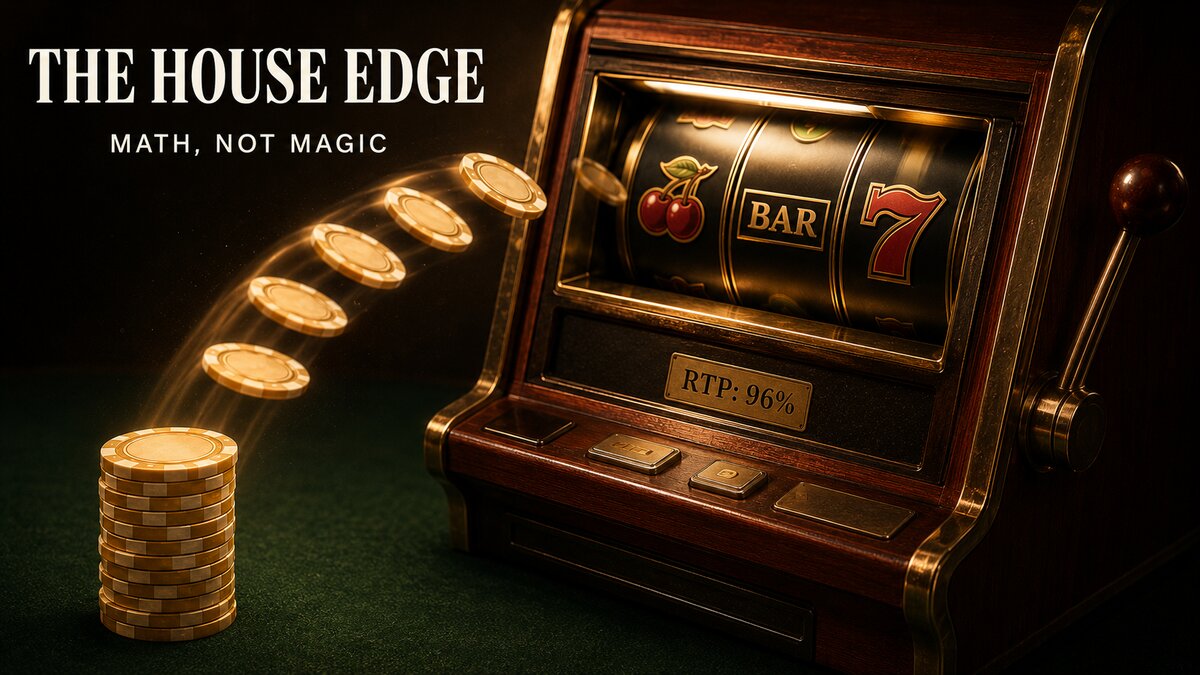
Every slot machine uses a random number generator (RNG) that produces outcomes independently of time, previous spins, or how many people are playing online slots or on the casino floor. The RNG cycles through millions of number combinations per second, and the moment you press spin, the outcome is determined by whichever number the generator lands on. This process is identical at 6 AM and midnight.
Table games like blackjack, roulette, and poker maintain fixed house edge percentages regardless of when you play. A blackjack table offering 3:2 payouts has the same mathematical edge at noon on Wednesday as it does during peak evening hours on Saturday. The roulette wheel doesn’t favor certain days, and the craps table odds remain constant around the clock.
This means timing matters for your gaming experience and costs—not for your mathematical chances of winning.
Variable Factors That Do Change With Timing
Table minimums fluctuate dramatically based on demand. During weekday mornings in Las Vegas, you might find low limit blackjack tables at $5-$10, while weekend nights on the Strip often push minimums to $25 or higher. Off-Strip and downtown properties frequently maintain even lower minimums during off peak hours, with electronic games sometimes accepting bets as low as $1-$5.
Crowd density affects everything from game availability to noise levels. During peak hours, finding your favorite slot machines or an open seat at blackjack tables becomes challenging. During slower periods, you have your pick of games, more space to breathe, and a more relaxed pace for learning basic strategy or simply enjoying penny slots without pressure.
These variable factors create distinctly different casino experiences depending on when you arrive.
Weekday vs Weekend Casino Experiences
The difference between a midweek afternoon and a Saturday night visit represents two fundamentally different types of casino experiences. Understanding these patterns helps you choose timing that aligns with whether you want a lively experience or a more relaxed environment.
Monday Through Thursday: The Quiet Casino
Weekday visits offer a calm atmosphere with easy access to tables, shorter waits for popular games, and significantly lower minimum bets. Many casinos keep $5-$10 blackjack tables open during these periods, and slot games across the floor see less competition.
This timing works exceptionally well for players learning new games. Without crowds watching, beginners can take time understanding rules, asking dealers questions, and developing basic strategy without feeling rushed. The more relaxed pace allows for focused play and better bankroll management.
Budget-conscious players benefit most from midweek visits. Lower table minimums stretch your gambling money further, hotel rates drop substantially (often half of weekend prices), and casino bonuses or free play promotions frequently target these slower periods to drive traffic.
Friday Through Sunday: The Social Casino
Weekend nights transform the casino floor into a high-energy social environment. Friday night marks the beginning of peak crowds, with Saturday night representing absolute peak volume in most markets. The atmosphere buzzes with excitement, live entertainment fills venues, and world class restaurants require reservations.
Table minimums climb during these periods—$15-$25 minimums become standard even for games that accept $5 during weekday mornings. Waits for popular blackjack tables and the craps table increase, and finding your favorite machines requires patience or early arrival.
For many gamblers seeking excitement and people watching, this trade-off works perfectly. The social energy, the sounds of wins across the floor, and the general buzz of a packed casino create an experience that quiet Tuesday afternoons simply cannot replicate.
Daily Timing Within the Week
Among weekdays, Tuesday and Wednesday consistently offer the lowest crowds and costs. Monday often carries residual weekend traffic, and Thursday evenings begin the weekend ramp-up in many casinos.
Sundays present a mixed picture: daytime sees moderate crowds from weekend visitors extending their trips, while Sunday evenings taper off as travelers depart.
| Day | Crowd Level | Table Minimums | Best For |
|---|---|---|---|
| Monday | Moderate | Low-Medium | Transition day, still decent value |
| Tuesday | Very Low | Lowest | Maximum savings, quiet play |
| Wednesday | Very Low | Lowest | Budget players, learners |
| Thursday | Low-Moderate | Low-Medium | Good value before weekend |
| Friday | High (evening) | High | Social atmosphere seekers |
| Saturday | Very High | Highest | Entertainment, nightlife fans |
| Sunday | Moderate | Medium | Daytime value, evening departure |
This weekly pattern holds across most major gaming markets, though special events and conventions can significantly impact any given week.
Optimal Daily Timing Strategies
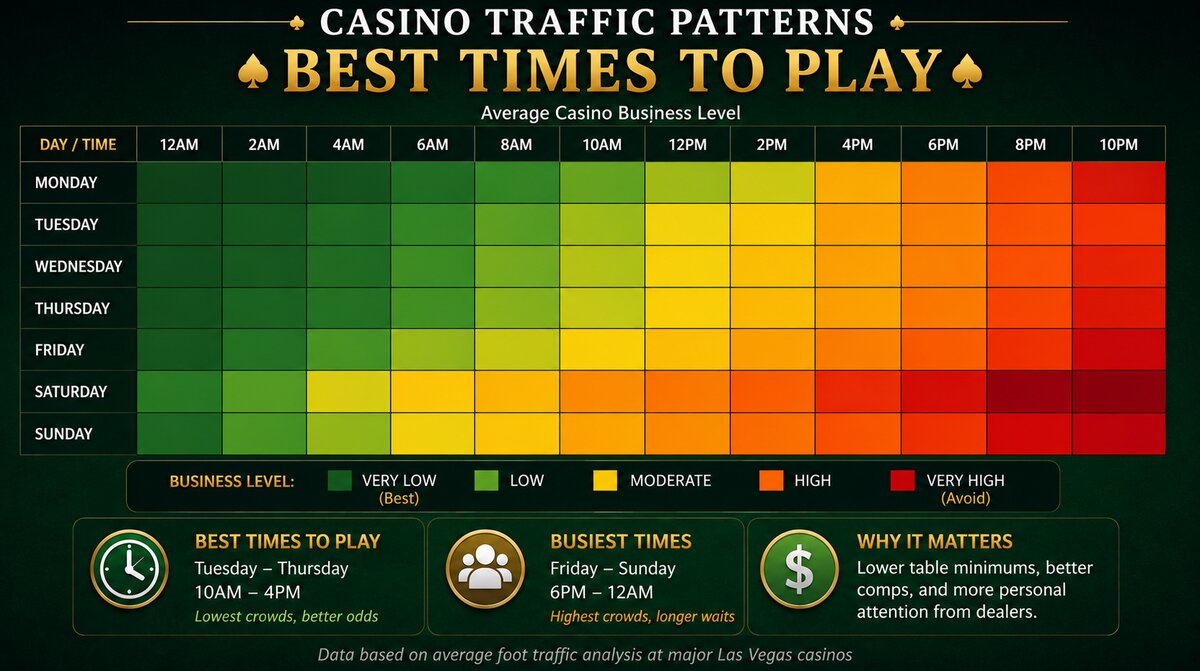
Tuesday mornings show the lowest casino floor traffic.
Beyond choosing the right day of the week, the specific hours of your casino visit can significantly impact your experience. Understanding hourly patterns helps you maximize value regardless of which day you visit.
Morning Sessions (6 AM – 12 PM)
Early morning hours offer the lightest crowds even on typically busy days. Recreational players haven’t arrived, and the casino floor feels spacious and unhurried. For players who prefer fewer people and a relaxed environment, morning sessions deliver these conditions most consistently.
To maximize morning casino visits:
- Arrive shortly after table games open in the pit (which may lag behind general casino hours)
- Check minimum bet signs immediately—many properties run lower minimums during these hours
- Sign up for the players club if you haven’t already, as some casinos offer double points or special promotions during early morning hours
- Plan your departure before lunch crowds begin arriving (typically around 11 AM-noon)
The tradeoff: fewer entertainment options, limited restaurant availability, and reduced social atmosphere.
Timing Comparison by Hour
| Time Period | Crowd Level | Table Minimums | Atmosphere | Ideal Player Type |
|---|---|---|---|---|
| Early Morning (6-10 AM) | Very Low | Lowest | Quiet, calm | Budget players, early birds |
| Late Morning (10 AM-2 PM) | Low-Moderate | Low | Pleasant, relaxed | Learners, moderate play |
| Afternoon (2-5 PM) | Moderate | Medium | Building energy | Social-but-not-peak seekers |
| Early Evening (5-8 PM) | High | Higher | Lively atmosphere | Dinner and gaming combo |
| Peak Night (8 PM-Midnight) | Very High | Highest | Full energy | Nightlife enthusiasts |
| Late Night (Midnight-4 AM) | Moderate | Variable | Thinning but active | Night owls |
Individual casinos vary, and late night hours can still see decent minimums as tables close and remaining ones adjust. The key insight: your preferred atmosphere and budget should drive your timing choices, not beliefs about better odds at certain hours.
Common Myths About Casino Timing
Timing myths persist because humans naturally seek patterns, even where none exist. The gambler’s fallacy—believing past outcomes influence future results—underlies many of these beliefs. Understanding why these myths are false helps you make decisions based on legitimate factors.
The “Loose Slots After Midnight” Myth
The belief that slot machines pay more during late night hours or off peak hours has zero basis in how gaming systems actually work. Slot machines cannot be programmed to change payout percentages based on time or crowd levels. The random number generator operates identically at all hours, and regulatory oversight requires consistent, audited payout rates.
Actionable advice: Instead of timing your play around myths about higher payouts, focus on finding machines with posted higher RTP (return to player) percentages. Many casinos publish this information, and online slots typically display RTP clearly. This represents a real mathematical difference, unlike timing-based beliefs.
The “Weekend Lucky Streak” Myth
Some many gamblers believe weekend nights are luckier because they see or hear about more jackpots and big win celebrations. This perception stems from simple math: more players equals more total wins happening, creating visibility bias. Your individual odds per spin or hand remain identical regardless of how many other people are playing.
Practical solution: Choose timing based on your preferences for crowd levels, entertainment access, and minimum bets. If you enjoy the energy of a packed casino, weekend nights deliver that experience—but your probability of hitting progressive jackpots remains exactly the same as Tuesday afternoon.
The “End of Month Payout” Myth
The idea that casinos must hit payout targets and therefore pay more at month’s end contradicts both how gaming systems work and regulatory requirements. Payout percentages are built into game software and cannot be arbitrarily adjusted based on calendar dates.
What actually matters: Promotional calendars do follow monthly patterns. Many casinos reset loyalty point structures, run end-of-month drawings, or offer special casino bonuses around these dates. These marketing programs provide real value—focus on those rather than imaginary payout cycles.
Making casino decisions based on these common myths costs players in two ways: it leads to suboptimal timing choices, and it distracts from factors that actually affect value and experience.
Conclusion and Next Steps
The best time to go to the casino depends entirely on what kind of experience you want. For lower table minimums, fewer crowds, and a more relaxed pace, midweek visits between Tuesday and Thursday during daytime hours deliver the best value. For live entertainment, social energy, and a lively atmosphere, Friday night and Saturday night remain the peak casino experience—with corresponding higher costs.
Game odds never change based on timing. What changes is everything surrounding the games: how much you pay to play, how crowded the floor feels, what promotions are available, and how much entertainment surrounds your gambling session.
Immediate actionable steps:
- Check the casino’s promotional calendar before your visit—midweek often features bonus offers and free play opportunities
- Decide whether you prioritize low costs or high energy, then choose your timing accordingly
- Set your visit budget based on expected table minimums for your chosen time period
- Sign up for the players club to access timing-specific promotions and comps
Related topics worth exploring include bankroll management strategies, game selection based on house edge rather than timing, and understanding how special events in Las Vegas or other gaming destinations can significantly impact normal timing patterns.
Additional Resources
- Casino promotional calendars: Check individual casino websites for weekly and monthly bonus schedules, including free play offers during off peak hours
- Table minimum tracking: Sites like Vegas Advantage track real-time minimums at Las Vegas properties, helping you identify low minimums before arriving
- Event calendars: Convention bureau websites help identify dates when normal timing patterns won’t apply due to major events
- Responsible gambling resources: The National Council on Problem Gambling (1-800-522-4700) provides support for managing gambling time and spending, regardless of when you visit